Das NarrenschiffXXIV
Кто на себя весь мир взвалил,О пользе собственной забыл, —Терпи, коль в баню угодил.
Wer aller welt sorg vff sich ladtVnd nit gedenckt syn nutz vnd schadDer lyd sich / ob er ettwan bad
Unto mo folys here ordayne I a bargeWhiche medlyth with euery mannys besynesAnd nat intendeth to their owne losse and chargeGreat payne and wo suche folys oft oppresseAnd let them lerne with pacyent mekenesTo suffer sorowe for why they shall none lackeSyns they alone, the hole worlde take on theyr backe
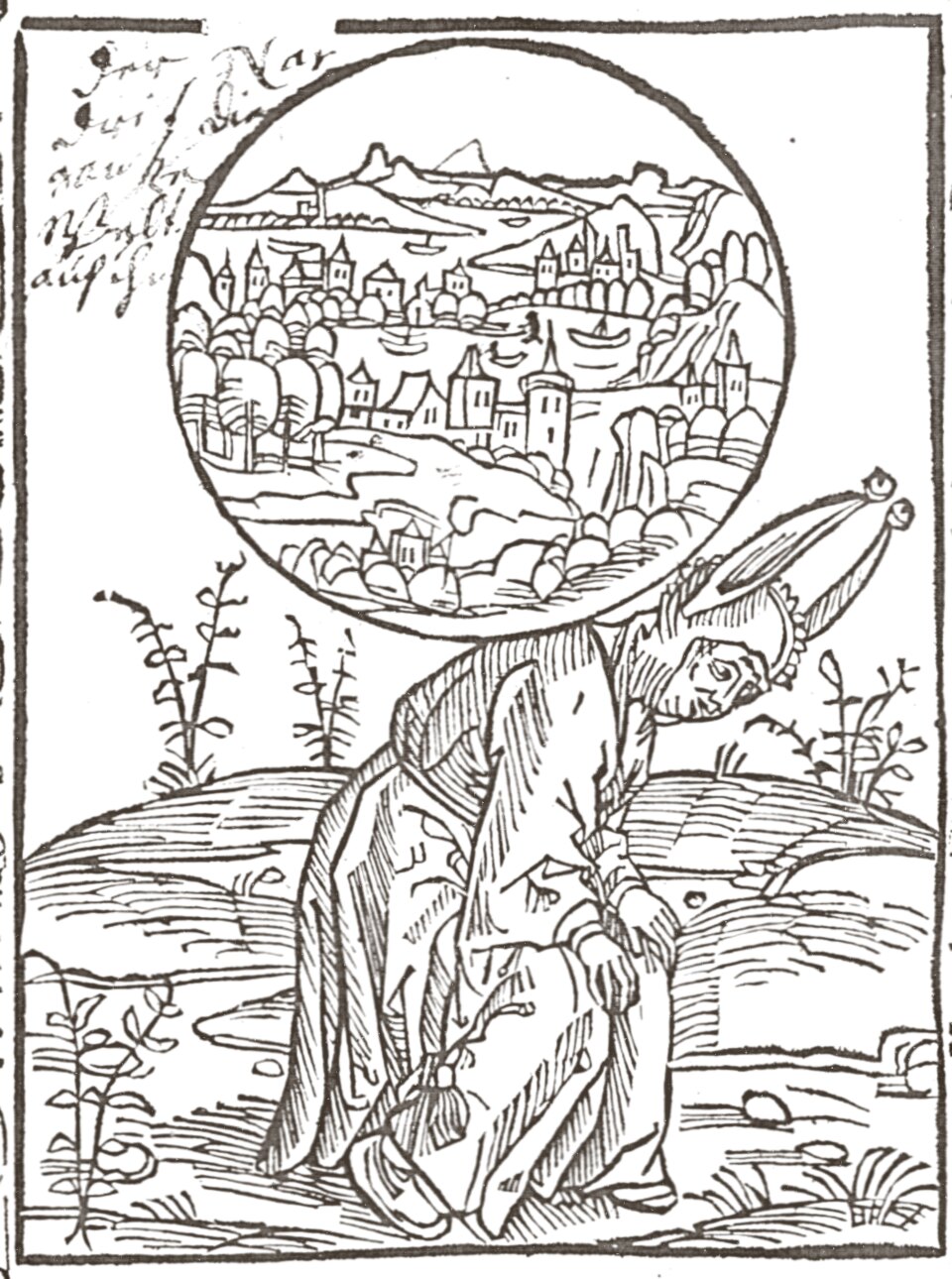
Of the ouer great and chargeable curyosyte of men
Об излишних заботахOf Too Much Care
Von zuͦ vil sorgen❦
XXIVОб излишних заботахOf Too Much Care
Дурак, кто груз нести берётся,
Что и поднять не удаётся,
И в одиночку прёт туда,
Где трое не свершат труда.
Кто на хребет весь мир берёт,
В мгновенье ока упадёт.
Об Александре мы читаем:
Весь мир казался тесным краем,
Он в нём потел, как будто мало
Простора телу там бывало,
А кончил тем, что был доволен
Семью ступнями в чистом поле.
Лишь смерть умеет показать,
Чем должен всяк довольным стать.
Могучей Диоген-мудрец,
Хоть бочка — весь его дворец:
Не нажил в мире ничего,
Но и желанье одного
Имел: чтоб царь прошёл, не стоя,
И солнце не закрыл собою.
Кто цели высоко берёт,
Тот ставку крупную кладёт.
Что пользы, если кто возьмёт
Весь мир, а сам в нём пропадёт?
Что в том, что плоть взойдёт высоко,
Коль душу в ад швырнёт глубоко?
Кто в горе: «Гуси без сапог!»,
Кто б вымел каждый путь, как мог,
Сровнял бы горы и долины, —
Тому покоя нет в помине.
В заботах лишних проку нет:
Сведут и плоть, и крови цвет.
Тот глуп, кто день за днём скорбит
О том, чего не отвратит.
Der ist eyn narr der tragen will
Das jm vff heben ist zuo vil
Vnd der alleyn will vnderston
Das er selb dritt nit moecht gethon
Wer nympt die gantz welt vff syn rück
Der felt jn eynem oeugen blück
Man lyßt von Alexander das
Die gantz welt jm zuo enge was
Vnd schwitzt dar jnn / als ob er nüt
Für synen lib genuog hett witt
Ließ doch zuo lest benuegen sich
Mit syben schuehigem ertrich
Alleyn der dot erzeygen kan
Wo myt man muoß benuegen han
Diogenes vil maechtiger was
Wie wol syn behusung was eyn faß
Vnd er nütt hatt vff aller erdt
So was doch nüt das er begerdt
Dan Alexander solt für gon
Vnd jm nit vor der sunnen ston /
Wer hohen dingen stellet noch
Der muoß die schantz oüch wogen hoch
Was hülff eyn menschen das er gewyn
Die gantz welt / vnd verdürb er dryn
Was hülff dich / das der lyb kaem hoch
Vnd fuer die sel jns hellen loch /
Wer sorgt ob die gens gent bloß
Vnd faegen wil all gassen vnd stroß
Vnd eben machen berg vnd tal
Der hat keyn fryd / ruow / vberal
Zuo vil sorg / dye ist nyenan fuer
Sie macht manchen bleich vnd dürr
Der ist eyn narr der sorgt all tag
Das er doch nit gewenden mag
He that wyll coueyt to bere more than he may
And take on his sholders more than he can sustayne
Suche is a fole, his dedys wyll not deny
And with his owne wyll gooth to peryll and payne.
He is vnwyse whiche is ioyous and fayne
To offer his necke to bere that without fere
Whiche were ynoughe for dyuers men to bere
That man that taketh vpon his backe alone
The heuy weght of the large fyrmament
Or any burdeyne whiche maketh hym to grone
Whiche to sustayne his strength is ympotent
No meruayle is if he fall incontynent
And than whan he lowe on the grounde doth lye
He oft repentyth his purpose and foly
We haue in storyes many examples great
Shewynge the lewde ende of this curyosyte.
I rede of Alexander that dyd often sweate
In great peryls to augment his dignyte
He was nat content with europe and asye
Nor all the grounde under the fyrmament
At the last ende, cowde nat his mynde content
As if all the erth were nat suffycyent
For his small body by curyouse couetyse
But at the last he must holde hym content
With a small cheste, and graue nat of great pryce.
Thus deth vs shewyth what thynge sholde vs suffyce
And what is the ende of our curyosyte.
For dethe is lyke to hye and lowde degre
What shall a kynge at his last endynge haue
Of all his realme and infynyte treasoure
Saue onely his towmbe, and the grounde of his graue
But thoughe it be of great pryce and voloure
As is conuenyent to his hye honoure.
Yet lytell conforte to his soule shall it gyue
But cause of bostynge to them that after lyue
Thus whan man vnto his last ende is come
He nought with hym bereth of his dignytees
Wherfore cynicus a man of great wysdome
Lorde grettest of Grece in londes and Cytees
Hathe lefte great example vnto all degrees
For his great ryches his herte dyd neuer blynde
But worldly pompe set clene out of his mynde
He forced of no castels nor excellent byldynge
Dispysynge charges and besynes worldly
But gaue his mynde to vertue and cunnynge
And namely to the scyence of astronomy
Consyderynge that great rest of mynde and of body
With hym abydeth whiche with bolde herte is fayne
To folowe vertue, and leue charges mundayne
He that so doth no weght doth vndertake
Vpon his backe of so great a grauyte
That his small strength must it agayne forsake.
Where he that attempteth grettest thynges, and hye:
Great weyght of charges and moche dignite
Must lerne to suffer payne thought and vexacion
By his great charges of perturbacion.
What auayle is it the worlde to obtayne
In one mannys power, and all other to excell
To suffer trouble, and vayne charges sustayne
And at the last his pore soule gooth to hell
There toren and tourmented in paynes cruell
It were moche better to kepe a quyet mynde
And after our deth eternall rest to fynde
He that taketh thought for euery besynes:
And caryth for that whiche doth nat apertayne
Nor longe to his charge, he is full of blyndnes
And no houre shall rest, but styll in thought and payne
Care for thy owne charges, theron set thy brayne
For he a fole is that caryth or doth intende
For another mannys charge whiche he can nat amende
Therfore lyue in rest after thy degre.
Nor on suche thynges do nat thy mynde aply
Whiche ar no thynge apertaynynge vnto the
If thou so do thou shalt fynde rest therby
Auoyde thou the charge of worldly mysery
For godes take no thought great care ne trauayle.
Whiche after deth shall do the none auayle
Barklay to the folys
Fole clere thy iyen and of thy selfe beware
Care moste for thy owne besynes and charge
For other mennes take no great thought nor care
If thou thy conscience mayst therof discharge
A curyous man that of his tunge is large
Talkynge or carynge of other, his place is best
Hye in the fore top of our folysshe barge
For in that place is small quyet or rest
Alexander Barclay, The Shyp of Folys of the Worlde, London, 1509 — вольное переложение королевской строфой, с «посланиями» переводчика.a free version in rhyme royal, with the translator’s own envoys.
· XXIV ·