Das NarrenschiffXXIX
Кто сам себе один хорош,А всех других не ставит в грош,Тот лоб о камни ранит сплошь.
Wer vff syn frumkeyt halt alleynVnd ander vrteylt boeß vnd kleynDer stoßt sich offt an hertte steyn
Who that reputyth hym selfe iust and fawtlesOf maners gode, and of lyuynge commendable.And iugeth other (parchaunce that ar gyltles)To be of a condicion reprouableHymselfe nat notynge, thoughe that he were culpableHe is a fole, and onys shall haue a fallSyns he wyll other iuge, hym selfe yet worst of all.
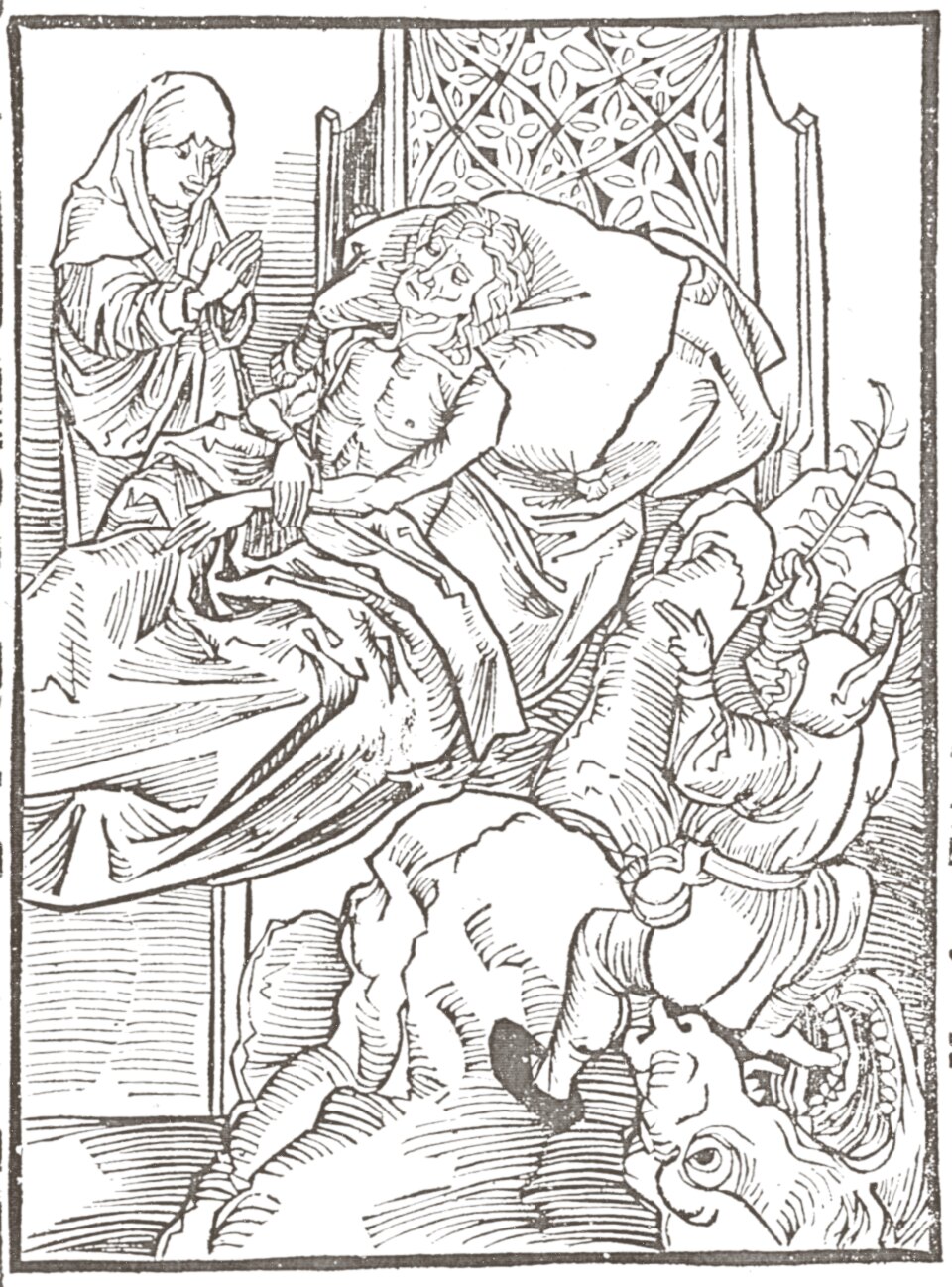
Of them that gyue jugement on other
О тех, кто судит другихOf Him Who Judges Others
Der ander lüt vrteylt❦
XXIXО тех, кто судит другихOf Him Who Judges Others
Дурак, кто, грёзой обольщён,
Решит, что выше всех взнесён,
Не ведая, что в час один
Душе пасть в ад, на дно глубин.
Но дурень всяк утешен сим:
Черёд, мол, нынче не за ним.
Хоть видит смерть других людей,
Причину сыщет поскорей
И скажет: «Тот вот так-то жил,
Тот буен был, а тот — уныл,
Тот сделал это, тот — иное,
За то и Божьей взят рукою».
Судить умершего он рад,
Что, может, Божьей лаской взят,
А сам грешней живёт намного,
Идёт на ближнего, на Бога,
И кары, казни не страшится,
Хоть знает: смерть должна случиться.
Где, как, когда — не знает он,
Пока из уст дух выйдет вон.
В геенну верить он не мог,
Пока не ступит за порог;
Тут ум к нему придёт сполна,
Когда огня кругом стена.
Свой век всяк хвалит без конца,
Но знает Бог один сердца.
Иной у всех слывёт дурным,
А Богом знаем и любим.
Иной в почёте на земле,
А после смерти — в адской мгле.
Дурак, кто скажет, не стыдясь,
Что чист и не пристала грязь.
Одним все дурни и грешат:
Быть тем, кто есть, никто не рад.
Der ist eyn narr der sich vertroest
Vff won / vnd meynt er sig der groeßt
Vnd weiß nit das jn eyner stund
Syn sel fert dieff jn hellen grund
Aber den trost hat yeder narr
Er meynt nit syn der naehst der far
Wann er schon ander sterben sicht
Bald hat eyn vrsach er erdicht
Vnd kan sagen / der dett also /
Der was zuo wild / der seltten fro
Der hatt diß / vnd jhens gethan
Dar vmb hatt jn gott sterben lan
Vnd vrteilt eynen noch sym tod
Der villicht ist jn gotts gnod
So er jn groessern sünden lebt
Wider gott vnd syn naehsten strebt
Vnd foercht dar vmb nit stroff vnd buoß
Vnd weiß doch / das er sterben muoß
Wo / wenn / vnd wie / ist jm nit kundt
Biß das die sel fert vß dem mundt
Doch gloubt er nit das sy eyn hell
Biß er hyn jn kumbt über die schwel
So würt in denn der synn vff gan
So sie jn mitt der flammen stan
Eyn yeden dunckt syn leben guot
Alleyn das hertz gott kennen duot
Für boeß schatzt man offt manchen mann
Den gott doch kent / vnd lieb will han
Mancher vff erden würt geert
Der noch sym tod zuor hellen fert
Eyn narr ist wer gesprechen dar
Das er reyn sig von sünden gar
Doch yedem narren das gebrist
Das er nit syn will das er ist
Many fallyth in great peryll and damage
And greuous deth by the vyce of folysshnes
Perseuerantly bydynge in theyr outrage
Theyr soule infect with synne and viciousnes
And though that deth hym alway to them addres
Yet hope they in longe lyfe and prosperyte
And neuer asswageth theyr blynde iniquyte
The tyme passeth as water in a ryuere
No mortall man can it reuoke agayne
Dethe with his dartis vnwarely doth apere
It is the ende of euery man certayne
The last of all ferys and ende of worldly payne
But thoughe we knowe that we all must haue an ende
We slepe in synne disdaynynge vs to amende
Some thynke them gode, iust and excellent
Myghty stronge and worthy of preemynence:
Charitable, chast, constant and innocent
Nat doutynge deth nor other inconuenyence
But yet ar they wrappyd sore in synne and offence
And in a vayne hope, contynue in suche wyse
That all the worlde (saue them selfe) they dispyse
They take on them the workes of god omnipotent
To iuge the secrete of mannys mynde and thought
And where no sygne is sene playne and euydent
They iuge a man saynge, his lyfe is nought
And if deth one hath vnto his last ende brought
(As mad) they mende nat theyr mysgouernaunce
Nat thynkynge that they ensue must the same daunce
Suche folys fayne causes and often tymes say:
That he that is dede vsed ryot and moche foly
Whiche causyd hym to dye before his day
And that he was feble, or full of malancoly
Ouer sad, or prowde, disceytfull and pope holy
Uiciously lyuynge in couetyse and gyle
Wherfore god suffred hym lyue the shorter whyle
Lo these blynde folys saciat with vyce
Jugeth hym that perchaunce dyd nat amys
Whyle he here lyuyd, and is in paradyce
Rewardyd for his workes in endles ioy and blys
Where as this lewde Juger, here in this worlde is
Styll lyuynge in synne, suffrynge great payne and wo
And though he thynke hym gode shall neuer come therto
He that in synne here lyeth fettered fast
And iugeth the deth of his frende or neyboure
Whiche from this lyfe is departed and past.
Let hym beware, for onys come shall the houre
That he must fele dethis dolorouse rygoure.
And after that endure infernall punysshement
For iugynge and mysdemynge of people innocent
The terme and day, of deth is moche vnsure
The deth is sure, the houre is vncertayne
Deth is generall to euery creature
Theder we must all, be it pleasour or payne
Wherfore wysdome wyll that we shulde refrayne
From folysshe demynge and nons deth discus
After deth god wot howe it shall be with vs
Alas full often a iust man gode and true
Of mynde innocent sad sober and sympyll
Passynge his tyme in goodnes and vertue
Is of these folys thought and demyd for yll
And he that is nought, frowarde of dede and wyll
Of these folys blynde frantyke and wode.
Without all reason is iugyd to be goode
Wherfore I proue that a blynde fole thou art
To iuge or deme a mannys thought or intent
For onely god knoweth our mynde and hart
Wherto we gree and to what thynge we assent
But who that is rightwyse iust, and innocent
And louyth god with honour and with reuerence
Than, may he boldely iuge anothers offence
Alexander barklay to the folys
Amende you folys: do way these folysshe wayes
Take ye no charge: nat mete for your degre.
And note these wordes: whiche criste our sauyour sayes
Juge nat another, and thou shalt nat iugyd be
It longeth onely to the hye dyuynyte
To iuge our mynde: for he is true iustyce
All thynge discernynge by right and equyte
No man sholde deme, whyle hym selfe is in vyce
Alexander Barclay, The Shyp of Folys of the Worlde, London, 1509 — вольное переложение королевской строфой, с «посланиями» переводчика.a free version in rhyme royal, with the translator’s own envoys.
· XXIX ·