Das NarrenschiffXXVIII
Верши Господь по нашей воле —Беда была б во всякой доле:Не смеха — слёз досталось боле.
Solt gott nach vnserm willen machenVbel gieng es jn allen sachenWir würden weynen me dann lachen
Here note we fowlys whiche can nat be contentWith goddes worke, and ordynaunce dyuyneThynkynge theyr owne wyll moche more expedyentNat wyllynge theyr myndes to his wyll to enclyneBut suche folys often sholde come to ruyneAnd wo with sorowe and losse sholde they fyndeIf god sholde conforme his workes to theyr mynde
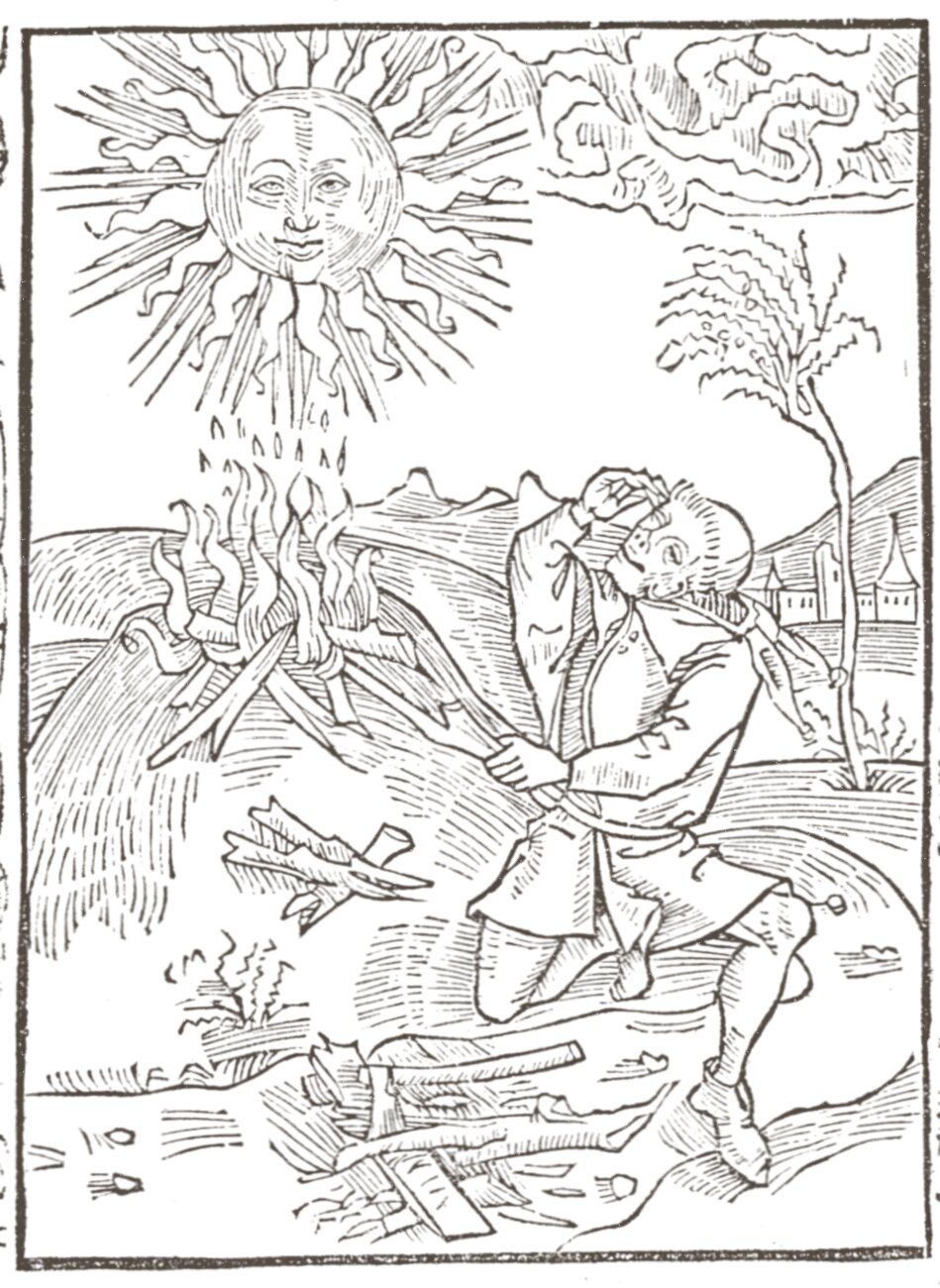
Of them that folysshly speke agaynst the workes of god
О ропщущих на БогаOf Speaking against God
Von wider gott reden❦
XXVIIIО ропщущих на БогаOf Speaking against God
Дурак, кто разожжёт костёр,
Чтоб солнцу в помощь свет простёр,
Иль факел кто зажжёт и мнит,
Что солнца блеск он подкрепит.
Кто ж Бога смеет вразумлять,
Тот Ганс с Горы Дурацкой, знать:
Всех дураков он превзошёл
И глупость в грамоту возвёл.
Ведь Божий промысл, благодать
Сумели знанья столь вобрать,
Что им не надобен совет
Людской, и нужды в славе нет.
Зачем, дурак, винишь ты Бога?
Твоя премудрость столь убога!
Пусть Бог творит, как Сам желает,
Дарит ли, мстит или карает,
Пусть шлёт и бурю, и покой:
Хоть ты и в злобе сам не свой,
А дело не пойдёт скорее:
Себе ж ты делаешь больнее.
Ещё и грех на душу взял;
Уж лучше б ты, дурак, молчал.
Мы молим: «Воле быть Твоей
Как в небе, так и средь людей», —
А ты, глупец, Его коришь
И слушаться себя велишь.
Устроит лучше Бог дела,
Чем дурья блажь твоя могла.
Народ еврейский учит впрок,
Желает ли роптанья Бог.
Кто был советником Его,
Как всё творил из ничего?
Кто Сам Ему вперёд давал,
Тот пусть бы хвастал и пенял.
Der ist eyn narr / der macht eyn für
Das er dem sunnen schyn geb stür
Oder wer fackeln zündet an
Vnd will der sunnen glast zuo stan
Vil mer der gott stroffe vmb syn werck
Der heyßt wol Henn von Narrenberg
Dann er all narren vbertrifft
Sin narheyt gibt er jn geschrifft
Dann gotz gnad vnd fürsichtikeyt
Ist so voll aller wissenheyt
Das sie nit darff der menschen ler
Oder das man mit ruom sie mer
Dar vmb o narr / was straffst du gott
Din wißheyt ist gen jm eyn spott
Loß gott duon synem willen nach
Es sy guottaet / stroff / oder rach
Loß wittern jn / loß machen schoen
Dann ob du joch dar vmb bist hoen
So gschicht es doch nit dester ee
Din wünschen duot alleyn dir we
Dar zuo versündest dich gar schwaer
Vil waeger dir geschwygen wer
Wir betten das syn will der werd
Als jnn dem hymel / so vff erd /
Vnd du narr wilt jn stroffend leren
Als ob er siech an dich muest keren
Gott weiß all ding baß ordinieren
Dann durch din narrecht fantisieren
Das jüdisch volck das lert vnß wol
Ob gott well das man murmlen sol
Wer was syn ratgeb zuo der zyt
Do er all ding schuoff / macht vß nüt
Wer hat jm geben vor vnd ee
Der ruem sich des / vnd stroff jn me
He is a fole and laboreth in vayne:
Whiche with small brondes of fyre flamynge bryght
Entendyth with laboure besynes and payne
Of the shynynge sonne for to encrease the lyght
Suche one assayeth a thynge passynge his myght
And is a fole to set thought or delyte
To mende that thynge whiche god hath made perfyte
But yet is he a moche gretter fole truely
Whiche wyll correct that thynge whiche god hath done
And doth nat his herte his wyll and mynde aply
To goddes workes and deuyne prouysyon
Of all other maddest is his condycion
And more frantyfe forsoth I may hym call
Than they that ar vext with furyes infernall:
(Thou fole) the myght of god omnipotent
In vertue and wysdome so largely doth extende
His maiesty, and power is so excellent
His glorious godhede his workes doth defende
So that no mortall man can them amende
Wenest thou mad fole that thou amende cannest ought
That he hath done: whiche made all thynge of nought
He that hath made the heuen and firmament
The londe, the se, and euery other thynge
Is so discrete, so wyse, and prouydent
Before his presence parfytely seynge
All thynge to come that neuer hath had beynge
His workes and dedys ar so perfyte and ryght
That none can increas nor yet decreas his myght
He doth all thynge dispose moderate and dispence
Knowynge our mynde, and what is to vs most mete
All thynge is open and playne in his presence
Our inwarde thought must he nedes knowe and wete
And euery fortune is playne before his fete
He hath all thynge by lawe and order drest
And doth no thynge but it is for the best
Therfore whether he gyue thunder snowe or rayne
Wynde or wether, tempest or tourment
Frost lyghtnynge, fayre wether, outher storme sodayne
Mystes or clowdes, yet man sholde be content
And nat with worde nouther inwarde intent
Agaynst god grutche, but euery day and houre
Magnyfye the dedys of god his creatoure
It were moche better thou fole that thou were dome
Than to cast lewde wordes agaynst thy lorde in vayne
Thou fole he worketh no thynge but by wysedome
And yet art thou nat content but dost complayne
Thou sekest vengeaunce (for thy synne) and payne
In hell for euer, thynkynge thy selfe so wyse
To teche thy god, and his warke to dispyse
It is nat lawfull for any, hye nor lowe
To be so bolde so blynde or so cruell
Grutchynge wordes agaynst his god to throwe
Thughe to theyr plaseour a thynge nat fortune well
Take example by the children of Israell
Whiche oft for this synne suffred great payne and wo
Slayne and distroyed, so haue ben many mo
Many a lewde body without wysdome or rede
Grutche in theyr myndes, and openly do blame
Almyghy god, whan theyr children ar dede
Where rather they ought to enioye of the same
For it myght fortune that great rebuke and shame
Myght to theyr frendes haue come by theyr synne and cryme
Soone after: if they had nat dyed at that tyme
Wherfore this one clause is my conclusyon
That god our maker is wyse and prouydent
Blame nat his workes by thyne abusyon
For all that he doth is for the best intent
But if that god sholde alwaye assent
To our desyres and euer perfourme our wyll
Our owne requestis sholde tourne vs to great yll
Alexander barklay to the folys
O ye mad myndes that no thynge vnderstonde
O man presumptuous and vnobedyent
Howe darest thou be so bolde to take on honde
To repreue the workes of god omnipotent
Wylt thou hym teche, as more wyse and prouydent
Than he is (whiche made all thynge of nought)
Leue of this thy foly, and holde thy selfe content
For thou art a fole to set theron thy thought
Alexander Barclay, The Shyp of Folys of the Worlde, London, 1509 — вольное переложение королевской строфой, с «посланиями» переводчика.a free version in rhyme royal, with the translator’s own envoys.
· XXVIII ·