Das NarrenschiffXXVII
Кто путных знаний не берёт,Тот бубенцом своим трясёт,Его канат глупцов ведёт.
Wer nit die recht kunst studiertDer selb jm wol die schellen ruertVnd würt am narren seyl gefuert
He that vayne stody doth haunt or exercyseAnd lesyth his tyme, of fruyte voyde and barayneResortynge to ryot whiche cunnynge doth dispyseAnd that of doctryne (in maner) hath disdayneSuche shall in age of his madnes complayneAnd seynge that he lesyth his tyme thus in folyLet hym come to our folysshe company.
Who studies not the proper art,He surely wears the cap and bells,Is led forth on the string of fools.
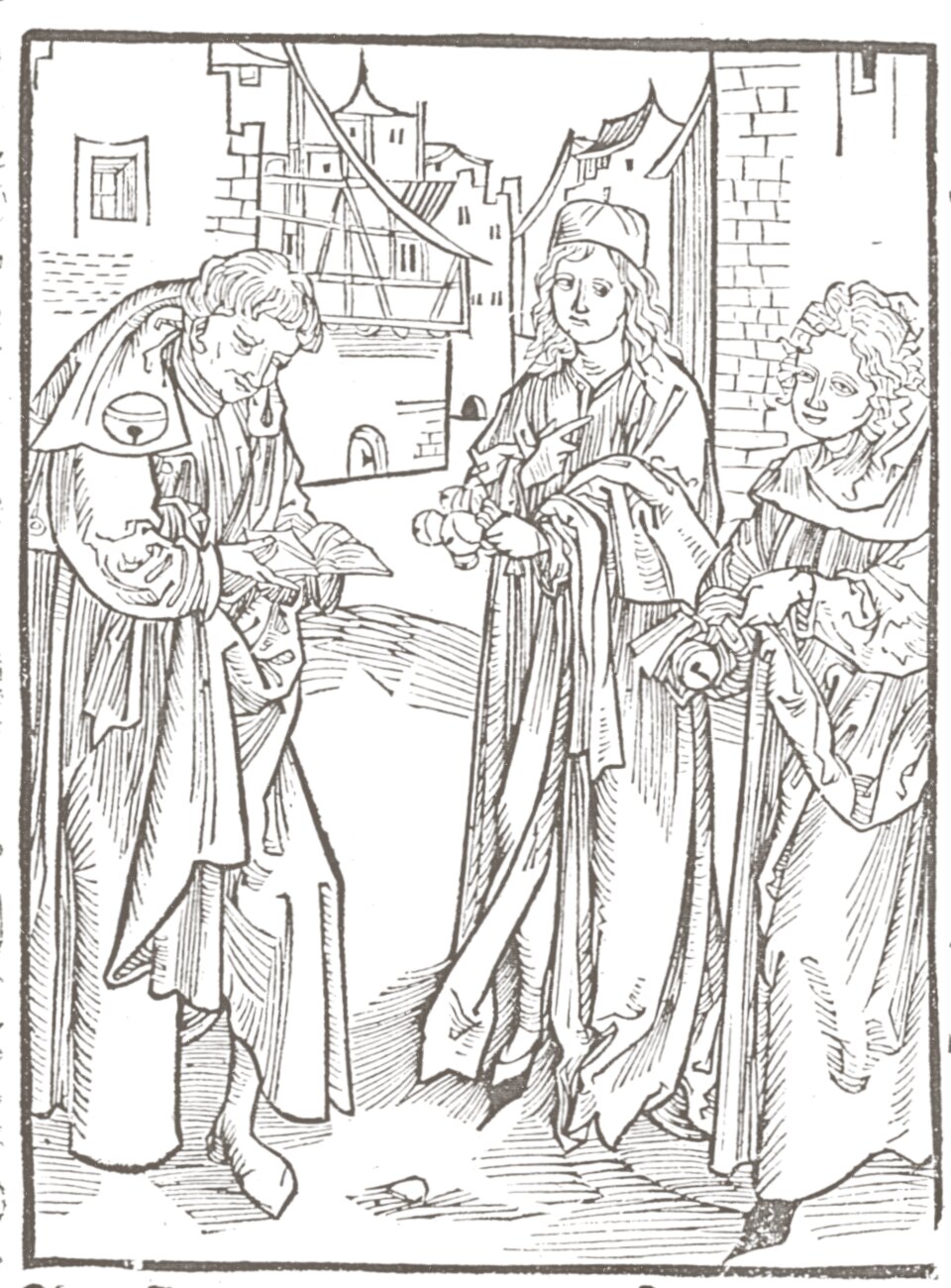
Of vnprofytable stodyOf Useless Studies
О бесполезном ученииOf Useless Studies
Von vnnützem studieren❦
XXVIIО бесполезном ученииOf Useless Studies
Не обойду и школяров:
Колпак им загодя готов;
Лишь стоит им его надеть —
А хвост приложится, заметь.
Им надо бы корпеть, трудиться,
А им бы только волочиться.
Юнцам все знания — пустяк,
Им ныне любо только так:
Учить, в чём нет плода и прока.
Магистры — с тем же все пороком:
Наук прямых не ценят сами,
Пустыми занявшись словами:
Грядёт ли день иль ночи мгла,
Творил ли человек осла,
Бежит ли Сортес иль Платон, —
Вот чем торг в школах оживлён.
Не дурни ль, не тупой ли люд,
Кто дни и ночи в том ведут,
Себя и ближних распинают,
Наук же лучших знать не знают?
Недаром Ориген писал,
Что жаб он в них самих признал
И пёсьих мух, что встарь напали
И край Египетский терзали.
На том вся юность и пройдёт:
Нас Лейпциг, Эрфурт, Вена ждёт,
Нас Гейдельберг, Майнц, Базель знали,
А в дом со срамом прибежали.
Деньга проедена дотла —
Тут и печатня нам мила,
И выучка — вино таскать:
Так Гансик-шут выходит, знать.
Вот деньгам прок, в конце концов:
Колпак их просит бубенцов.
Der studentten ich ouch nit fyr
Sie hant die kappen vor zuo stür
Wann sie alleyn die streiffen an
Der zippfel mag wol naher gan
Dann so sie soltten vast studieren
So gont sie lieber buobelieren
Die jugent acht all kunst gar kleyn
Sie lerent lieber yetz alleyn
Was vnnütz vnd nit fruchtbar ist
Das selb den meisteren ouch gebrist
Das sie der rechten kunst nit achten
Vnnütz geschwaetz alleyn betrachten
Ob es well tag syn / oder nacht
Ob hab eyn mensch / eyn esel gemacht
Ob Sortes oder Plato louff /
Solch ler / ist yetz der schuoler kouff /
Sindt das nit narren vnd gantz dumb
Die tag vnd nacht gant do mit vmb
Vnd krützigen sich vnd ander lüt
Keyn bessere kunst achten sie nüt
Dar vmb Origines / von jnn
Spricht / das es sint die froesch gesyn
Vnd die hundes mucken die do hant
Gedurechtet Egypten landt /
Do mit so gat die jugent hyen
So sint wir zuo Lyps / Erfordt / Wyen
Zuo Heidelberg / Mentz / Basel / gstanden
Kumen zuo letst doch heym mit schanden
Das gelt das ist verzeret do
Der truckery sint wir dann fro
Vnd das man lert vff tragen wyn
Dar vß würt dann eyn henselyn
So ist das gelt geleit wol an
Studenten kapp will schellen han
Nowe in this Nauy many them selfe present
Of this our roylame and from beyond the see
Whiche in theyr stody or lewde and neglygent
Lesynge theyr tyme at the vnyuersyte
Yet count they them selfe of great auctoryte
With theyr proude hodes on theyr neckes hangynge
They haue the lawde: but other haue the cunnynge
They thynke that they haue all scyence perfytely
Within theyr hertes bostynge them of the same
Though they therto theyr mynde dyd neuer aply
Without the thynge, they ioy them of the name
But suche mad folys to theyr great losse and shame
Whyle they sholde norysshe theyr myndes with science
They seke theyr pleasour, gyuen to neglygence
They wander in euery inconuenyence
From strete to strete, from tauerne to tauerne
But namely youth, foloweth all offence
No thynge intendynge the profyte to dyscerne
Nor fruyte of cunnynge wherby they myght gouerne
Them selfe by reason, but suche thynges they ensue
Wherby they neyther get good maners nor vertne
But he that intendeth to come to the science
And godly wysdome of our elders: certayne.
He must sore stody, for without dilygence
And besy laboure no man can it obtayne
None ought to cesse: though it firste be a payne.
In good perseueraunce getteth great ryches
Where no good cometh by sleuthfull ydelnes.
But moste I marueyll of other folys blynde
Whiche in dyuers scyencis ar fast laborynge
Both daye and nyght with all theyr herte and mynde
But of gramer knowe they lytyll or no thynge
Whiche is the grounde of all lyberall cunnynge
Yet many ar besy in Logyke and in lawe
Whan all theyr gramer is skarsly worth a strawe
If he haue onys red the olde dotrinall
With his diffuse and vnparfyte breuyte
He thynketh to haue sene the poyntis of grammer all.
And yet of one errour he maketh two or thre
Precyan or sulpice disdayneth he to se
Thus many whiche say that they theyr grammer can
Ar als great folys as whan they firste began
One with his speche rounde tournynge lyke a whyle
Of logyke the knottis doth lows and vndo
In hande with his sylogysimes, and yet doth he fele
No thynge what it menyth, nor what longeth therto
Nowe sortes currit: Nowe is in hande plato
Another comyth in with bocardo and pheryson
And out goeth agayne a fole in conclusyon
There is nought else but Est and non est
Blaberynge and chydynge, as it were beawlys wyse
They argue nought els but to proue man a beest
Homo est Asinus is cause of moche stryfe
Thus passe forth these folys the dayes of theyr lyfe
In two syllabis, not gyuynge aduertence
To other cunnynge doctryne, nor scyence.
I wyll nat say but that it is expedyent
The to knowe of Logyke the chrafte and connynge
For by argument it maketh euydent
Moche obscurenes, somtyme enlumynynge
The mynde: and sharpynge the wyt in many a thynge
But oft yet by it a thynge playne bryght and pure
Is made diffuse, vnknowen harde and obscure
It is ynoughe therof to knowe the grounde
And nat therin to wast all thy lyfe holly
Styll grutchynge lyke vnto the frogges sounde
Or lyke the chaterynge of the folysshe pye
If one afferme the other wyll deny
Sophestry nor Logyke with their art talcatyfe
Shewe nat the way vnto the boke of lyfe
With suche folyes tender youth is defylyd
And all theyr dayes on them they set delyte
But godly doctryne is from theyr myndes exylyd
Whiche sholde the body and soule also profyte
They take no layser, pleasur nor respyte
To other scyences, pleasaunt and profytable
But without ende in one thynge chat and bable
One rennyth to almayne another vnto fraunce
To parys padway Lumbardy or spayne
Another to Bonony, Rome or orleance
To cayne, to Tolows, Athenys or Colayne
And at the last retournyth home agayne
More ignorant, blynder and gretter folys
Than they were whan they firste went to the scolys
One bostynge the name of a lawer or deuyne
His proude hode hye vpon his stately necke:
Thus muste a gode clerke vnto a foule enclyne
Lowt with the body and with obedyence becke
And thoughe it tourne to theyr rebuke and checke
Yet nowe a dayes ouer many suche there be.
Whiche in stede of cunnynge vseth audacyte
The hode must answere for the follysshe student
Theyr tyme hath ben lost frutles and barayne.
Theyr frendes godes on suche folyes ar spent
To their damage thought hunger and payne:
Thus to conclude: me thynke it is but vayne
The frendes to labour the dayes of theyr lyue
To spare for suche scolers whiche shall neuer thryue
The great foly, the pryde, and the enormyte
Of our studentis, and theyr obstynate errour
Causeth me to wryte two sentences or thre
More than I fynde wrytyn in myne actoure
The tyme hath ben whan I was conductoure
Of moche foly, whiche nowe my mynde doth greue
Wherfor of this shyp syns I am gouernoure.
I dare be bolde myne owne vyce to repreue
Howe be it I knowe my wordes shall suche greue
As them selfe knoweth fawty and culpable
But if they be wroth: take they me by the sleue
For they shall bere the hode and I wyll the bable:
But firste ye studentis that ar of mynde vnstable
Ye wasters and getters by nyght in felde or towne
Within my Nauy wolde I set you to a cable
If I not fered lyst ye your selfe wolde drowne
Also I fere lyst my shyp sholde synke for syn
If that Cupido and Uenus seruytours
On the vnsure se my shyp entred within
Or all the folys promotyd to honours
I none receyue can of hye progenytours
My shyp is nat dressyd for them conuenyent
And to I fere lyst theyr cruell rygours:
Sholde rayse to my shyp some tempest or tourment
Thenuoy of barklay to the folys
Fy studentis clens your myndes of this cryme
Gyue ones your hertis to parfyte dylygence
Howe longe in Idelnes, wyll ye lese your tyme
In pryde and ryot, with all other offence
Alas what profyte get ye by neglygence
But spende your goodes in all iniquyte
And where your frendes thynke, ye labour for scyence:
Ye lese your tyme bryngynge them to pouertee
Leue of suche stody as is vnprofytable
Without fruyte outher godly discyplyne
And gyue your myndes to scyences lawdable
Where ye may your herte set and inclyne:
To Arystotyls or Platoys doctryne
And nat alway on logyke or Sophestry
I wyll nat say but it is a thynge dyuyne
And moche worth to knowe Phylosophy
The students I cannot neglect;
They too are taxed with cap and bells,
And when they put their headgear on
The point may somewhat backward hang.
For when they ought to study hard,
They'd rather go and fool about.
To youth all learning's trivial.
Just now they'd rather spend their time
With what is vain and of no use.
The masters have the selfsame fault,
In that true learning they despise
And useless trash alone regard:
As to whether it's day or night
Or whether a man a donkey made,
Or Socrates or Plato walked.
Such learning now the schools employs.
Are they not fools and stupid quite
That go about by day and night,
Among themselves and other folk?
For better learning they've no care.
Of them it is that Origen
Speaks, when he says that they are like
The frogs and grasshoppers that once
Th' Egyptian land reduced to waste.
And so the young men get them hence
While we at Leipzig, Erfurt, Wien,
Heidelberg, Mainz and Bâle hold out.
But come back home although with shame,
The money by that time is spent.
And then we're glad to turn to trade,
And then one learns to bring in wine,
And soon turns out a serving-man.
The student cap will get its bells.
Alexander Barclay, The Shyp of Folys of the Worlde, London, 1509 — вольное переложение королевской строфой, с «посланиями» переводчика.a free version in rhyme royal, with the translator’s own envoys.
Merrick Whitcomb, A Literary Source-Book of the German Renaissance, Philadelphia, 1899 — построчный перевод.a line-for-line translation.
· XXVII ·