Das NarrenschiffXXXI
Кто «cras» да «cras» кричит, как вран,Тот до могилы всё болван:Колпак на завтра больший дан.
Wer singt Cras Cras glich wie eyn rappDer blibt eyn narr biß jnn syn grappMorn hat er noch eyn groesser kapp
He that cras cras syngeth with the croweDeferrynge the tyme of his amendementAmonge our folys, in this our shyp shall roweFor his presumpcion, dull mynde and blynde intentWhat knowe these folys whether god omnypotentWyll graunt them to lyue vntyll another day.Wherfore we ought to mende vs whyle we may.
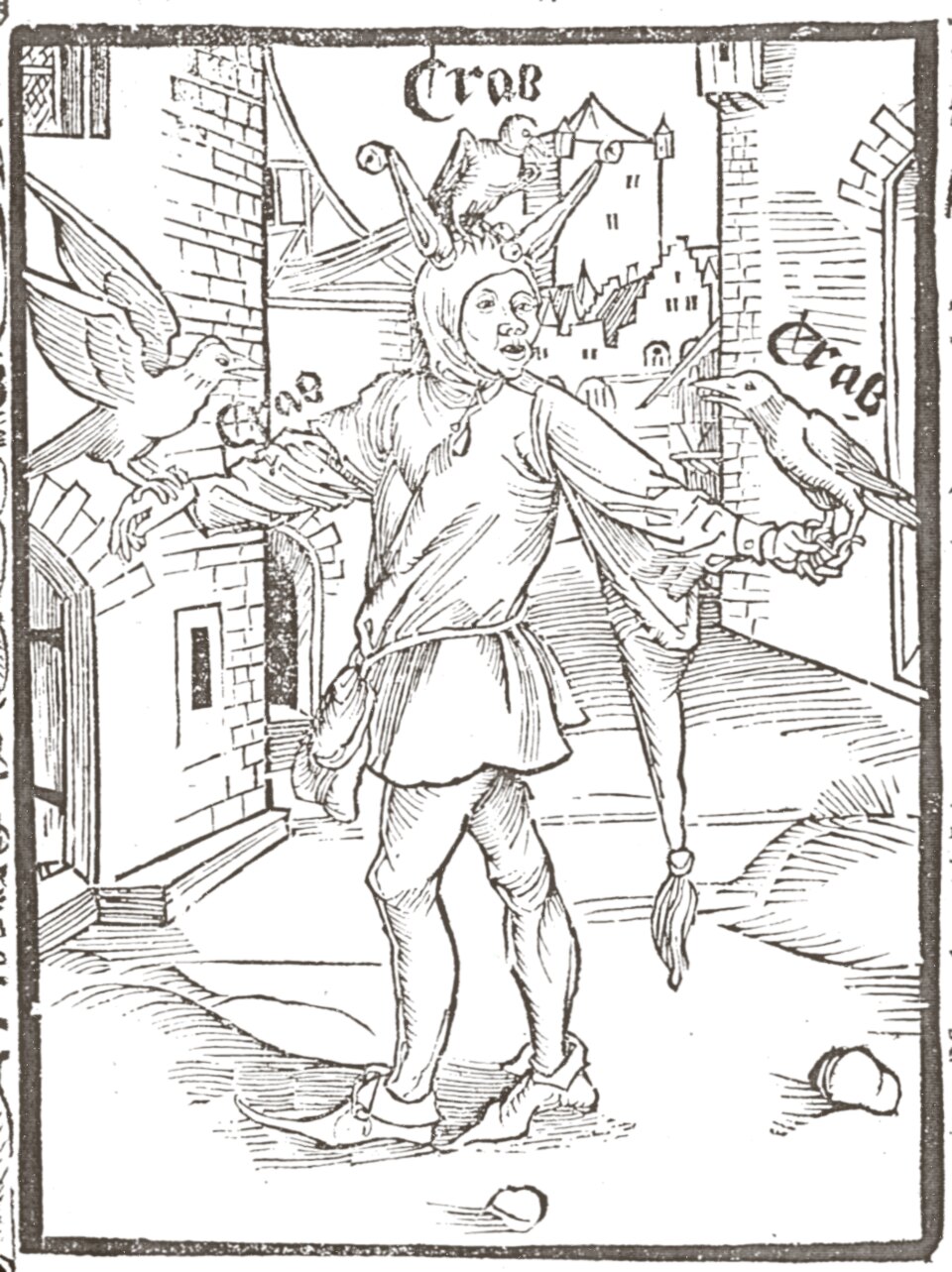
Of them that prolonge from day to day to amende themselfe
Об откладывании на завтраOf Seeking Delay
Von vffschlag suͦchen❦
XXXIОб откладывании на завтраOf Seeking Delay
Дурак, кому внушает Бог,
Чтоб нынче ж лучше стать он мог,
Грехи оставил поскорей
И жизнь повёл бы почестней,
А он отсрочку ищет впрок
И на другой день ставит срок,
Поёт, как ворон: «Cras» да «cras», —
А будет жив ли в оный час?
Глупцов сгубила эта блажь:
Всё «завтра, завтра» — песня та ж.
На грех, на глупость всяк охоч,
Спешит туда во всю-то мочь;
А где Господь и правый труд —
Туда насилу лишь бредут,
Отсрочку ищут всякий раз:
«Покаюсь завтра, не сейчас,
Назавтра стану жить умней», —
Речь многих блудных сыновей.
То завтра не придёт вовек:
Бежит и тает, словно снег;
Когда ж душе пора в отлёт,
Тогда лишь завтра настаёт:
Так тело болью сражено,
Что о душе молчит оно.
Так и в пустыне полегло
Евреев многое число:
Никто в ту землю не вступил,
Что Бог рукой своей сулил.
Кто нынче каяться не стал,
Тот завтра пуще оплошал.
Сегодня Божий глас зовёт,
А завтра — кто же разберёт?
Таких уж тысячи в аду,
Кто мнил: «Вот завтра в ум войду».
Der ist eyn narr / dem gott jn gyt
Das er sich bessern soll noch hüt
Vnd soll von synen sünden lan
Eyn besser leben vohen an
Vnd er jm selbs suocht eyn vffschlag
Vnd nymbt zyl vff eyn andern tag
Vnd singt Cras / Cras / des rappen gsang
Vnd weißt nit ob er leb so lang /
Dar durch sint narren vil verlorn
Die allzyt sungen / morn / morn / morn /
Was sünd an trifft / vnd narrheyt sust
Do ylt man zuo mit grossem lust
Was gott an trifft / vnd recht ist gethon
Das will gar schwaerlich naher gon
Vnd suocht eyn vffschlag jm allzyt
Bychten ist besser morn dann hüt
Morn went wir erst recht leren tuon
Als spricht mancher verlorner suon
Das selb morn / kumbt dann nyemer me
Es flücht vnd schmiltzt glich wie der schne
Biß das die sel nym bliben mag
So kumbt dann erst der mornig tag
So würt von we der lib gekrenckt
Das er nit an die sel gedenckt
Also verdurbent jn der wuest
Der juden vil / der keyner muest
Noch solt gantz kumen jn das landt
Das gott verhieß mit syner handt
Wer hüt nit gschickt zuo rüwen ist
Der fyndt morn me das jm gebrist
Waen hüt beruefft die gottes stym
Der weißt nit / ob sy morn rueff jm
Der synt vil tusent yetz verlorn
Die meynten besser werden morn
If vnto any almyghty god doth sende
From heuen aboue by inspyracion dyuyne
Wyll and gode mynde his synnes to amende
And with his grace his thoughtes enlumyne
If that synner wyll nat therto enclyne
But doth dyffer and dryue frome day to day
A fole he is, no wyse man wyll denay
Yet many folowe this inconuenience
And knowynge theyr owne vyce, and lyfe full of ordure
The payne therof, and howe euery offence
And synne is punysshed of eche creature
Also they knowe that theyr deth is vnsure
And dye they must knowynge no houre nor space
Yet synne they styll, nat receyuynge this grace
They folowe the crowes cry to theyr great sorowe
Cras cras cras to morowe we shall amende
And if we mende nat than, than shall we the next morowe
Outher shortly after, we shall no more offende
Amende mad fole whan god this grace doth sende
He is vnwyse whiche trustes the crowes songe
And that affermyth that he shall lyue so longe
Syns deth (as I haue sayde) is so vnstable
Wherfore we ought alway vs to prouyde
And mende our lyfe and synne abhomynable
For though that thou be hole at the euyn tyde
Thou knowest nat sure that thou shall here abyde
Untyll the morne but if thou dye in that space
It shall be to late for the to cry cras cras
Syns it is in thy power that thou may
Amende thy selfe whan god inspyreth the
Why shalt thou tary vnto another day
The longer tary the lesse apt shalt thou be.
In olde sores is grettest ieopardye
Whan costome and vse is tourned to nature
It is right harde to leue: I the ensure
Therfore if that thou lewdly fall in syn
By thy frayle flesshe, and the fals fendes trayne
Take nat the vse, contynue nat therin
But by confessyon shortly ryse agayne
Synne alway thretenyth vnto the doer, payne
And grutche of conscience with moche thought and wo
Yet alwaye ar we redy and prone therto
Mannys lyfe on erth is euyn a chyualry
Agaynst our flesshe fyghtyng whiche often doth vs shame
Also the deuyll our goostly ennemy
On his parte labours to get vs in his frame
Thus oft we fall, and than our foly blame
Repentynge sore, and wyllynge to refrayne
But within an houre we fall therto agayne
Thus euer to vyce ar we redy and prone
The gyftis of grace we clene from vs exclude
We haue great cause sore to complayne and mone
We leue that thynge (our myndes ar so rude)
That myght vs gyde to helth and beatytude
Thus our owne foly, and our owne blynde madnes
Us often ledyth vnto great wretchydnes
And if it fortune, that at any tyme
Within our myndes we purpose stedfastly
For to confesse our synne, excesse, or cryme
Agayne our thought is changyd by and by
Away than ren we with the crowys crye
With one cras, to morowe, perauenture twayne
Without regarde had, vnto infernall payne
But in the meane space if that deth vntretable
Arrest the with his mace, fyers and cruell
And for thy synne and lyfe abhomynable
By iustyce damme thy soule for euer to hell
Than woldest thou gladly (If thou myght) do well
But there is no grace but doloure payne and sorowe
Than is to late to crye cras cras to morowe
The enuoy of the actour
Say what delyte, thou fole or what pleasoure
Takest thou in synne and voluptuosyte
It is small sothly, and passeth euery houre
Lyke to the water, and that in myserye
Therfore set nat in synne thy felycyte
This day begyn thy lewde lyfe to refuse
Perchaunce to morowe sholde be to late to the
So sholde cras the crwys songe the sore abuse
Alexander Barclay, The Shyp of Folys of the Worlde, London, 1509 — вольное переложение королевской строфой, с «посланиями» переводчика.a free version in rhyme royal, with the translator’s own envoys.
· XXXI ·