Das NarrenschiffXLV
Кого в огонь блажь заведётИль кто в колодец сам нырнёт,Тот поделом ко дну идёт.
Waen jn das für syn muott will bringtOder sunst selbs jnn brunnen springtDem gschicht recht / ob er schon erdrinckt
He is a fole that wyll purchace and desyreHis owne deth or putteth hym selfe in ieopardyLepynge in a well, or in a flamynge fyreAnd where he myght lyue so dyeth wyllynglySuche suffer theyr destruccyon worthelyAnd if that they be drowned outher brentIt is to late them after to repent.
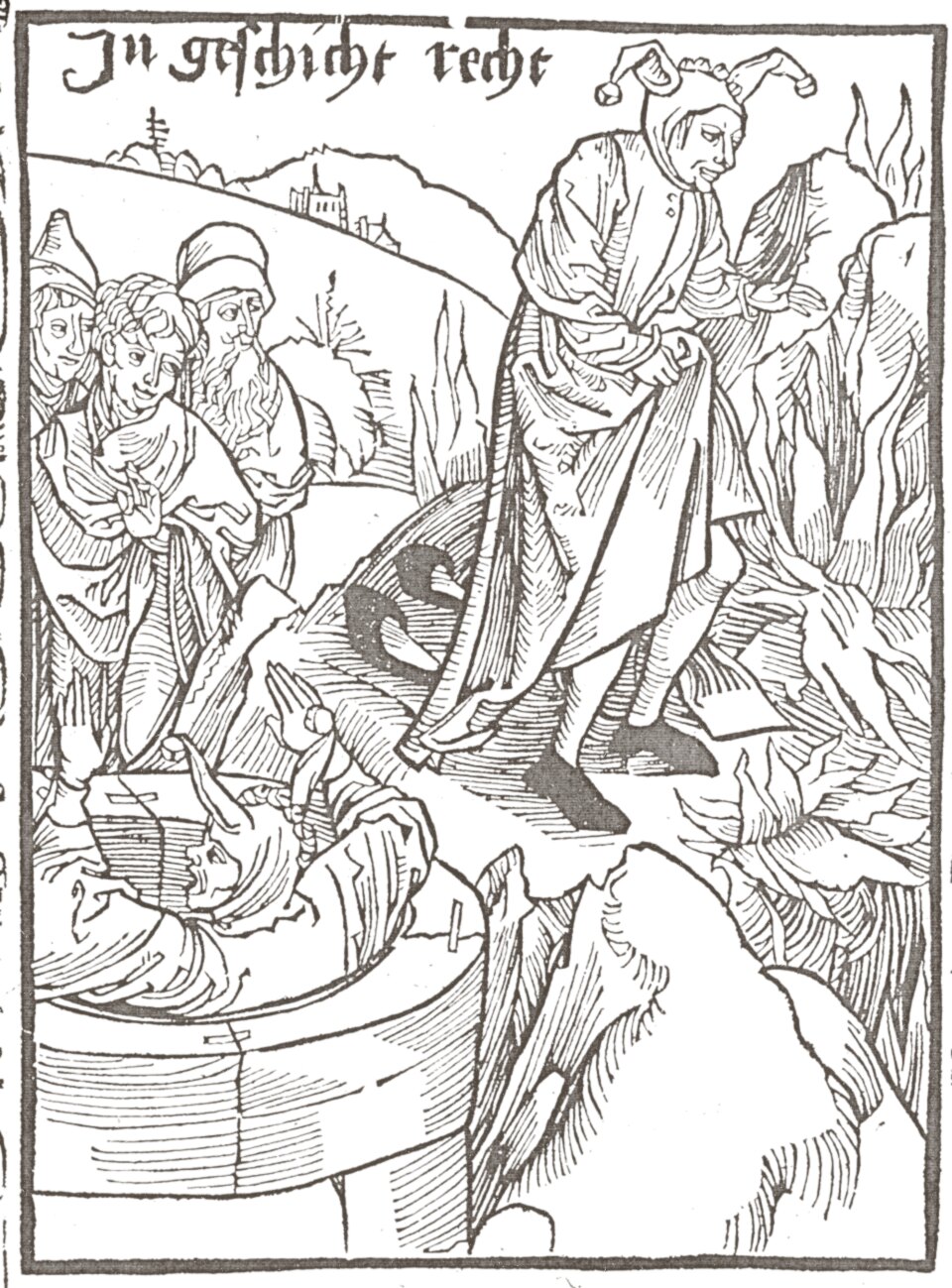
Of them that wyllynge and knowyngly put them self in ieopardy and peryll
О беде по собственной волеOf Wilful Misfortune
Von muͦtwilligem vngefell❦
XLVО беде по собственной волеOf Wilful Misfortune
Иной дурак всегда в мольбах,
С усердьем (мнит он) на устах,
Зовёт он Бога во всю мочь,
Чтоб шкуру дурью скинуть прочь,
А сам колпак не хочет снять —
Что день, берёт его опять
И мнит: не внемлет Бог ему, —
Что просит — тёмно самому.
Кто сдуру сам в колодец — скок
И, в страхе, что тонуть бы мог,
Вопит: «Верёвку мне сюда!» —
Сосед: «И поделом! Туда
Он прыгнул сам, никто не гнал,
Сидел бы тут и бед не знал».
Так Эмпедокл был дурью пьян,
Что в Этны прыгнул жар-вулкан;
Кто б вытащил его назад,
В насилье был бы виноват:
Так в дури он своей увяз,
Что прыгнул бы и в новый раз.
Таков, кто ждёт, что Божий зов
Влечь силой к Богу сам готов,
Подаст и милость, и дары, —
А сам лежит до сей поры.
Иной свой день сам упустил,
И Бог уж слух к нему закрыл:
Не даст той милости ему —
Просить о дельном по уму.
Кто молится — о чём, не знает, —
Тот в ветер дует, тень стегает.
Иной у Бога просит то,
Что, сбудься, проклял бы раз сто.
Кто жизнь опасную ведёт,
Тот сам урон пусть и несёт.
Mancher narr ist der do bettet staet
Vnd duot (als jn dunckt) andaht gebet
Mitt rueffen zuo gott vberlut
Das er kum von der narren hut
Vnd wil die kappen doch nit lon
Er zücht sie taeglich selber an
Vnd meynt / gott well jn hoeren nit
So weiß er selbst nit was er bitt
Wer mit muotwill jn brunnen springt
Vnd voerchtend das er drynn erdrinckt
Schryg vast / das man eyn seil jm brecht
Syn nochbur sprech / es gschicht jm reht
Er ist gefallen selbst dar jn
Er moecht hie vß wol bliben syn
Empodocles jn solch narrheyt kam
Das er vff Ethna sprang jnn flam
Wer jn har vß solt gezogen han
Der hett jm gwalt vnd vnrecht gtan /
Dann er jn narrheyt was verruocht
Er hett es doch noch me versuocht
Alls duot wer meynt das gottes stym
In ziehen soll mit gwalt zuo jm
Im geben gnad / vnd goben vil
Sich dar zuo doch nit schicken will /
Mancher fuerloufft jm selbs syn tag
Das gott jn nym erhoeren mag
Dann er jm nym die gnaden gytt
Das er üt fruchtbars von jm bitt
Wer bett / vnd weiß nit was er bett /
Der bloßt den wint / vnd slecht die schet
Mancher jm gebett von gott begert
Im wer leid / das er wurd gewert
Wer lebt jnn eym soerglichen stat
Der hab den schad / wie es jm gat
I fynde mo folys yet. whome I shall note
Suche ar they whiche pray both day and nyght
To god and his sayntes cryeng with open throte
O glorious god helpe me by thy great myght
That I may clens my herte and clere my syght
Wherby all foly and synne may fro me fall
But yet this fole it leuyth nat at all
Suche folys oft pray for theyr amendement
Unto our lorde with syghynges sore and depe
But yet to synne contynually they assent
And after the same often complayne and wepe
Than say they playne that god hath had no kepe
Unto theyr prayer and taken of it no hede
But theyr owne foly is cause of theyr lewde dede
They se the peryll before theyr faces playne
That god hath ordeyned, for foly and for synne
They pray for helpe, and yet ar they full fayne
After the folys hode alway to ren
And besely laboure the same alone to wyn
So vnto god for helpe they cry and call
But they them selfe wyll helpe no thynge at all
Than thynke they theyr prayers to god nat acceptable
Bycause (anone) they haue nat all theyr wyll
And for that god is nat sone agreable
To here theyr cry and it graunt and fulfyll
These folys in theyr vyce contynue styll
And put theyr selfe in wylfull ieopardy
And where they myght they fynde no remedy
But these folys vnstabyll as the wynde
Prayeth vnto god and to his sayntis aboue
Nat knowynge what may content theyr folysshe mynde
Nor whether theyr askynge be for theyr behoue
But sothly this dare I both say and proue
And it auowe after my sympyll skyll
That neuer man shall syn without his wyll
If that one with his owne wyll doth fall
Into a well to assay the ieopardy
Whan he is there. if he lowde crye and call
Bothe on god and man for helpe and remedy
He sekyth that peryll, and dyeth worthely
So were it foly to gyue hym corde or trayne
Or other engyne to helpe hym vp agayne
Whan suche folys ar sure vpon the grounde
Without all daunger, peryll hurt or fere
They lepe in the wel and yet fere to be drowned
Empedocles though he right myghty were
With suche lyke foly hym selfe so sore dyd dere
That knowyngly and with his owne consent
Hymself he lost and by fyers fyre was brent
He lept hedelynge into the flamynge fyre
Of a brennynge hyll whiche callyd is Ethnay
To knowe the trouth, and nature to enquyre
Whether that same flame were very fyre or nay
So with his deth the trouth he dyd assay
But who that wolde hym drawen out of that hyll
Had ben a fole, syns it was his owne wyll
For why his mynde was blyndyd so certayne
That thoughe a man had hym delyuered than
The same peryll wolde he haue proued agayne
As mad as he forsoth is euery man
That is at eas, and hym nat so holde can
And also he that putteth hymselfe in drede
Or fere and peryll, where as he hath no nede
So he that prayeth to god that he may get
The blysse of heuen, and scape infernall payne
He is a fole his herte or mynde to set
On frayle ryches, welth and ioy mundayne
On stedfast fortune, on lucre or on gayne
For certaynly these thynges of worldly welth
Oft man deuydeth away from heuenly helth
Thus he that prayeth for welth or for ryches
Or in this worlde hym selfe to magnyfy
Prayeth for his hurt and cause of viciousnes
For worldly welth doth vyce oft multyply
So seke men theyr owne peryll wyllyngly
But who that prayeth, and can nat as he ought
He bloweth in the wynde, and shall nat haue his thought
And who that to honour couetyse to ascende
Or to lyue in damnable voluptuosyte
He seketh his peryll for if that he descende
From welth and worshyp to payne and pouerte
It is but worthy, and let hym pacyent be
It to endure with mynde demure and meke
He is worthy sorowe that wyll it alway seke
The enuoy of barklay to the folys
Ye that fayne wolde escape all ieopardy
Auoyde suche thynges the whiche myght cause the same
To proue a peryll, is foly certaynly
Whether it be done in ernest or in game
They that so doth may theyr owne madnes blame
For he that is sure, and to a fray wyll ren
May fortune come home agayne, nosles or lame
And so were it better for to haue byd within
Alexander Barclay, The Shyp of Folys of the Worlde, London, 1509 — вольное переложение королевской строфой, с «посланиями» переводчика.a free version in rhyme royal, with the translator’s own envoys.
· XLV ·