Das NarrenschiffLV
Кто взялся хвори врачевать,А их не в силах прогонять,Тот славный фокусник, видать.
Wer artzeny sich nymet anVnd doch keyn bresten heylen kanDer ist eyn guotter gouckelman
Who that assayeth the craft of medycyneAgaynst the seke and paynfull pacyentAnd hath no insyght cunnynge nor doctryneTo gyue the seke, helth and amendementSuche is a fole, and of a mad intentTo take on hym by Phesyke any cureNat knowynge of man, nor herbe the right nature
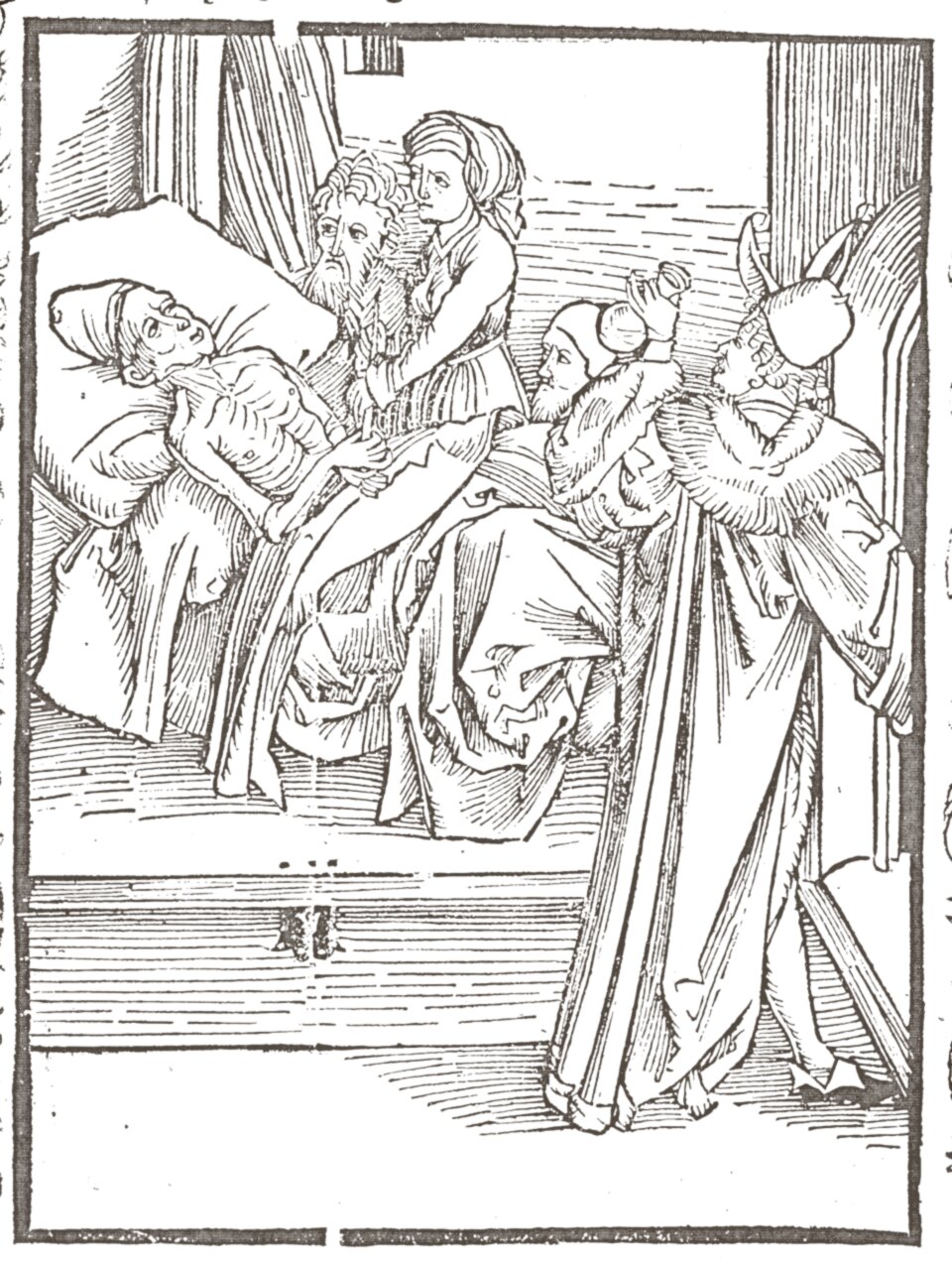
Of folysshe Fesycyans and vnlerned that onely folowe paractyke knowynge nought of the speculacyon of theyr faculte
О дурацком врачеванииOf Foolish Medicine
Von narrechter artzny❦
LVО дурацком врачеванииOf Foolish Medicine
Тот тоже в дурнях, кто, смотря
Мочу у смертного одра,
Речёт: «Постой, скажу потом,
Что в книгах я найду о том».
Пока он к книгам шёл домой,
Больной в дом мёртвых — на постой.
Лечить берётся целый полк,
А сам не знает в деле толк —
Лишь то, что травник им твердит
Да что старуха набубнит.
У них искусство — хоть куда:
Любую хворь сведёт всегда,
И разбирать не надо им,
Жена ль, дитя ль, старик пред ним,
Что влажно, сухо, зной иль хлад:
Трава одна — на всё подряд,
Как мазь, что в алебастре: в ход
Цирюльник всяк её берёт
На пластырь — и лечить потом
Нарыв, порез, укол, излом;
Колпак-сеньор им друг во всём.
Кто лечит мазью лишь одной
Глаз красный, гнойный и слепой,
Кто слабит, в склянку не глядя, —
Тот лекарь Цухсте сам родня.
Таков и стряпчий по делам,
Что дать совет не в силах вам.
Таков и духовник иной,
Что не постиг своей главой,
Какой для каждой из проказ
И для грехов любых припас;
Вкруг каши бродит — ум угас.
Глупцами многий совращён
И, не почуяв, сгинет он.
Der gat wol heyn mit andern narren
Wer eym dottkrancken bsicht den harrn
Vnd spricht / wart / biß ich dir verkünd
Was ich jn mynen buechern fynd
Die wile er gat zuou buochern heym
So fert der siech goen dottenheym /
Vil nemen artzeny sich an
Der dheyner ettwas do mit kan
Dann was das krüter buechlin lert
Oder von altten wyben hoert
Die hant eyn kunst / die ist so guot
Das sie all bresten heylen duot
Vnd darff keyn vnderscheyt me han
Vnder jung / allt / kynd / frowen / man /
Oder fücht / trucken / keiß / vnd kalt /
Eyn krut das hat solch krafft / vnd gwalt
Glych wie die salb jm Alabaster
Dar vß die scherer all jr plaster
Machent / all wunden heylen mit
Es sygen gschwaer / stich / brüch / vnd schnit
Her Cucule verloßt sie nit /
Wer heylen will mit eym vngent
All trieffend ougen / rott / verblent /
Purgieren will on wasserglaß
Der ist eyn artzt als Zuohsta was /
Dem glich / ist wol eyn Aduocat
Der jnn keynr sach kan geben ratt /
Eyn bichtvatter ist wol des glich
Der nit kan vnder richten sich
Was vnder yeder maletzy
Vnd gschlecht der sünden / mittels sy
Jo on vernunfft / gat vmb den bry /
Durch narren mancher würt verfuert
Der ee verdürbt / dann er das spuert /
Yet be mo folys vpon the grounde and londe
Whiche in our Shyp may clayme a rowme and place
Suche be Phesycians that no thynge vnderstonde
Wandrynge about in euery towne and place
Uysytynge the seke whiche lyue in heuy case
But nought they relefe of those paynes harde
But gape alway after some great rewarde
Suche that haue practyse and nought of speculatyfe
Whan they go vysyte some paynfull pacyent
Whan they hym note sure to forgo his lyfe
Without all hope of any amendement
Yet say they other than is in theyr intent
That his diseas is no thynge incurable
So that the pacyent to hym be agreable
Sayth the Phesycyan whan he hath his rewarde
Abyde a whyle tyll I my bokes ouer se
Wherby I may relyue thy paynes harde
Than from the pacyent homewarde departyth he
To se his bokes but if the pacyent dye
In that meane space the medycyne is to late
So may he lay it to his owne folysshe pate
The speculacion sholde he before haue sene
For that in Phesyke is chefe and pryncypall,
Yet many ar that vse the craft I wene
Whiche of the cunnynge knowe lytell or nought at all
A herbe or wede that groweth vpon a wall
Beryth in it these folys medycyne.
None other bokes haue they nor doctryne
Nor none they rede to haue the true scyence
Or perfyte knowlege and grounde of medycyne
They rede no volumes of the experyence
Of Podalirius nor Mesues doctryne
Suche folys disdayne theyr myndes to enclyne
Unto the doctryne of bokes of Auycen
Of ypocras and parfyte galyen
But all the substance of theyr blynde faculte
They take in bokes that speke of herbes only
Without respect had to theyr properte
Or operacion so often they them aply
To fals doctrynes, but first and specyally
These olde wyues therwith wyll haue to do
Thoughe they nought knowe that doth belonge therto
They dare be bolde to take on them the cure
Of them diseasyd howe be it that they nat can
Suche thynge descerne as longyth to nature
What is for woman good, and what for man
So oft they ende moche wors than they began
That the pore pacyent is so brought to his graue
Yet dyuers suters suche folysshe wytches haue
Suche wytches boldly dare afferme and say
That with one herbe they hele can euery sore
Under euery syne plenete, houre and day
Yet besyde this they boldly dare say more
That it that helyth a man aged and hore
Shall helpe also a woman or a childe
Thus many thousandes oft ar by them begyled
They say also in this our charge or cure
What nedes it note the synes or fyrmament
The cause of thynges, or the strength of nature
Whether that the seke be stronge or impotent
They gyue one medesyn to euery pacyent
And if it fortune it be to colde or warme
The faythles wytche in hande goth with hir scharme
Say folysshe Surgyan by what experyence
Or whose Doctryne discyplyne or lore
Takest thou on the, nought knowynge of scyence
With one Salue or plaster, to heale euery sore
Yet so thou thynkest, I the compare therfore
Unto a lawyer that of his craft nought can
And yet presumeth to counsell euery man
A lawer and a Phesician ar both lyke
Of theyr condicion and both insue one trayne
The one begylyth the pacyent and seke
Takynge his god for to encreas his payne
The other labours and cauteles oft doth fayne
To clawe the coyne by craft from his clyent
Castynge hym of whan all his good is spent
Thus thryues the lawer by anothers good
Iniustly gotten, disceyuynge his clyent
Also some other ar callyd Phesicians good
Whiche vtterly disceyue the pacyent
If he haue money than hath he his intent
And if the seke haue store ynough to pay
Than shall the cure be dryuen from day to day
So if the lawer may any auauntage wyn
He shall the cause from terme to terme defarre
The playntyf for a player is holde in.
With the defendaunt kepynge open warre
So laweyers and Phesicians thousandes do marre
And whan they no more can of theyr suers haue
The playntyf beggyth, the seke is borne to graue
But of these lawyers bycause I spoke before
Of folysshe Phesicians here onely I intende.
Somwhat to say: And of lawers no more
On you Phesicians shall I conclude and ende
I say no man may hym so well defende
That he for murder may auoyde punysshement
Yet may Phesicians, sleynge the pacient
Thus thou that of Phesycian hast the name
If thou nought knowe of perfyte medycyne
It is forsoth to thy rebuke and shame
To boste the scyence: nat hauynge the doctryne
Therfore I counsell that thou thy mynde inclyne
To haue the cunnynge, els certaynly thou shall
Haue thy blynde craft and lyue a fole with all.
The enuoy of the traslatour
Thou blynde Phesician that of thy craft nought can
Leue of thy lewdnes and bolde audacyte
To take on the: the cure of chylde or man
For by thy foly the wors myght they be
And ye that suerly perceyue your faculte
Be true therin, and auaryce from you cast
Shame is to brynge a man to pouertye
And than in paynes to leue hym at the last
Alexander Barclay, The Shyp of Folys of the Worlde, London, 1509 — вольное переложение королевской строфой, с «посланиями» переводчика.a free version in rhyme royal, with the translator’s own envoys.
· LV ·