Das NarrenschiffIII
Кто тленным благом дорожитИ в нём лишь радость сторожит,В том кровь дурацкая бежит.
Wer setzt syn lust vff zyttlich guotVnd dar jnn suocht syn freüd vnd muotDer ist eyn narr jnn lib vnd bluot
Ye that ar gyuen ouer moche to CouetyseCome nere, a place is here for you to dwelCome nere ye wastfull people in lyke wyseYoure rowme shall be hye in the TopcastellYe care for no shame, for heuen nor for hellGolde is your god, ryches gotten wrongfullyYe dame your soule, and yet lyue in penury.
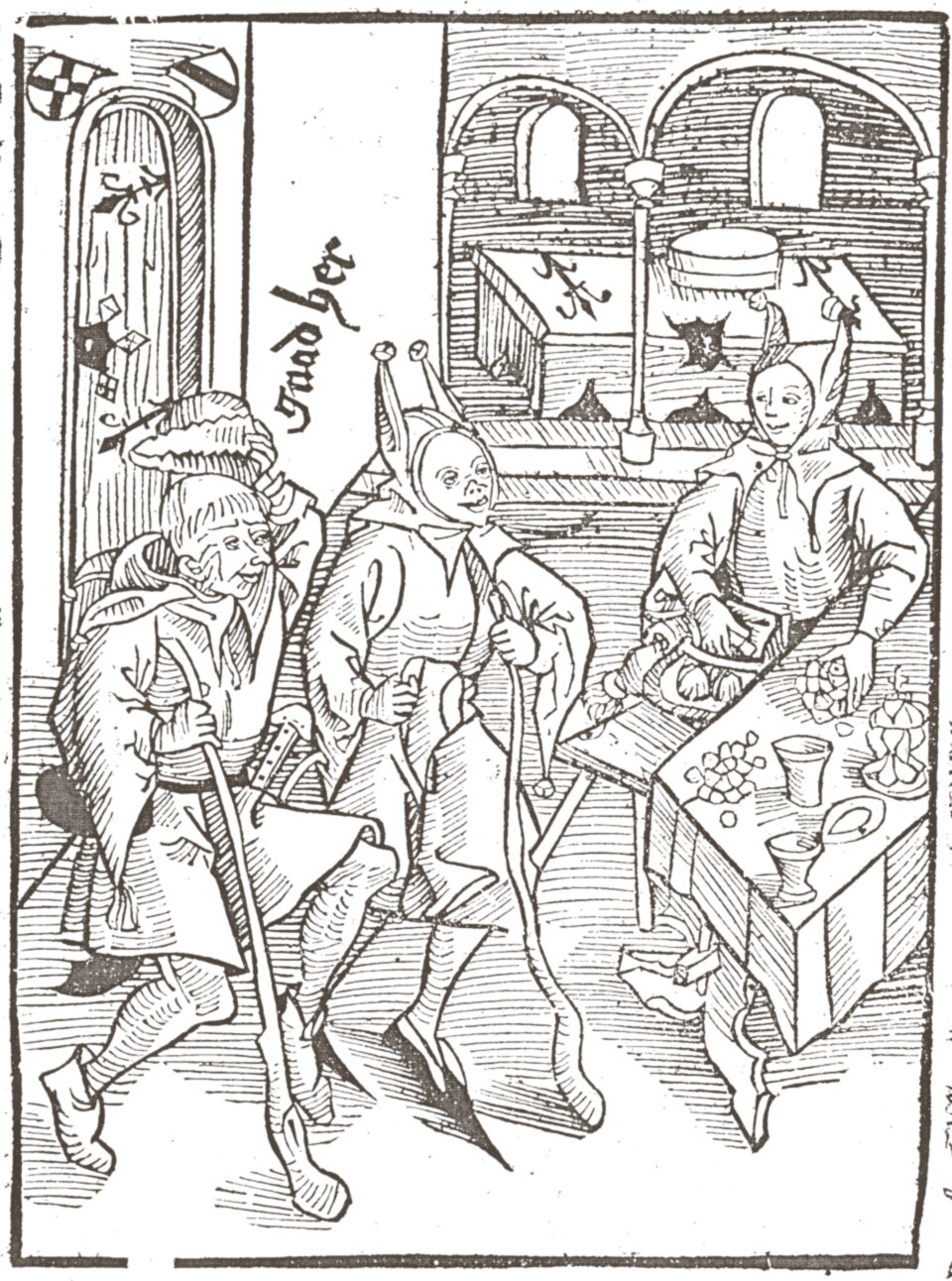
Of Auaryce or Couetyse and prodygalyte
О стяжательствеOf Greed
Von gyttikeyt❦
IIIО стяжательствеOf Greed
Тот дурень, кто казну растит,
А сам не весел и не сыт,
Кому всё копит — не поймёт,
Как в тёмный погреб он уйдёт.
Глупее тот, кто в мотовстве,
С беспечным ветром в голове,
Спустил, что Бог ему вручил,
Чему он лишь приказчик был
И даст отчёт в свой час и срок
Ценою больше рук и ног.
Дурак родне оставит много,
А душу не снабдит в дорогу;
Боится здесь нужды и глада,
А в вечность не бросает взгляда.
Ты слеп, о бедная душа:
Чесотки ждал — пришла парша.
Иной в грехе стяжает клад
И попадает в пекло, в ад.
Наследники о нём не тужат
И камнем ему не услужат;
И фунт на выкуп им тяжёл,
Хоть в глубь геенны он сошёл.
Дай Бога ради сам, живой:
По смерти — господин другой.
Мудрец не жаждал никогда
Земных богатств — его нужда
Себя лишь знать, себя уча:
Мудрец богаче богача.
Испил в конце и злата Красс,
По нём он жаждал много раз;
А Кратет деньги бросил в море,
Чтоб не было наукам горя.
Кто тленное всю жизнь гребёт,
Тот душу в грязь, в навоз кладёт.
Der ist eyn narr der samlet guot
Vnd hat dar by keyn fryd noch muot
Vnd weiß nit wem er solches spart
So er zuom fynstren keller fart
Vil narrechter ist der verduot
Mit üppykeyt vnd lichtem muot
Das so jm gott hat geben heyn
Dar jnn er schaffner ist alleyn
Vnd dar vmb rechnung geben muoß
Die me gilt dann eyn hand vnd fuoß
Eyn nar verlaeßt syn fründen vil
Syn sel er nit versorgen wil
Vnd voercht jm brest hie zyttlich guot
Nit sorgent / was das ewig duot /
O armer narr wie bist so blindt
Du voerchst die rüd / vnd findst den grindt
Mancher mit sünden guot gewynt
Dar vmb er jn der hellen brynt
Syn erben achten das gar kleyn
Sie hülffen jm nit mit eym stein
Sie loeßten jnn kum mit eym pfundt
So er dieff ligt jn hellen grundt /
Gib wil du lebst durch gottes ere
Noch dym dot würt eyn ander here /
Es hat keyn wiser nye begerdt
Das er moecht rich syn hie vff erd
Sunder das er lert kennen sich
Wer wiß ist / der ist me dann rich /
Crassus das golt zuo letzst vß trangk
Noch dem jnn hat gedürstet langk /
Crates syn gelt warff jn das mer
Das es nit hyndert jnn zuo ler
Wer samlet das zergenglich ist
Der grabt sin sel jn kott vnd mist
He that is besy euery day and houre
Without mesure, maner, or moderacion
To gather riches and great store of treasoure
Therof no ioy takinge, confort nor consolacion.
He is a Fole: and of blynde and mad opynyon
For that which he getteth and kepeth wrongfully
His heyre often wasteth moche more vnthryftely.
While he here lyueth in this lyfe caduke and mortal.
Ful sore he laboureth: and oft hungry gothe to bed
Sparinge from hymselfe: for hym that neuer shal
After do hym goode. thoughe he were harde bested.
Thus is this Couetous wretche so blyndly led
By the fende that here he lyueth wretchydly
And after his deth damned eternally.
There wandreth he in dolour and derknes
Amonge infernall flodes tedyous and horryble
Let se what auayleth than all his ryches
Ungracyously gotyne, his paynes ar terryble
Than wolde he amende but it is inpossyble
In hell is no order nor hope of remedy
But sorowe vpon sorowe, and that euerlastyngly.
Yet fynde I another vyce as bad as this
Whiche is the vyce of prodygalyte
He spendyth all in ryot and amys
Without all order, pursuynge pouertye
He lyketh nat to lyue styll in prosperite
But all and more he wastyth out at large
(Beware the ende) is the leste poynt of his charge.
But of the couetous somwhat to say agayne
Thou art a fole thy soule to sell for riches
Or put thy body to labour or to payne
Thy mynde to fere, thy herte to heuynesse
Thou fole thou fleest no maner cruelnesse
So thou may get money, to make thy heyr a knyght
Thou sleest thy soule where as thou saue it myght
Thou hast no rest thy mynde is euer in fere
Of mysauenture, nor neuer art content
Deth is forgoten, thou carest nat a here
To saue thy soule from infernall punysshement
If thou be dampned, than art thou at thy stent
By thy ryches which thou here hast left behynde
To thy executours, thou shalt small comforte fynde
Theyr custome is to holde fast that they haue
Thy pore soule shall be farthest fro theyr thought
If that thy carkes be brought onys in the graue
And that they haue thy bagges in handes cought
What say they, than (by god the man had nought)
Whyle he here lyuyd he was to lyberall
Thus dampned is thy soule, thy ryches cause of all
Who wyll denay but it is necesary
Of riches for to haue plenty and store
To this opynyon I wyll nat say contrary
So it be ordred after holy lore
Whyle thy selfe leuest departe some to the pore
With thy owne hande trust nat thy executours
Gyue for god, and god shall sende at all houres
Rede Tullius warkes the worthy Oratour.
And writen shalt thou fynde in right fruteful sentence
That neuer wyseman loued ouer great honour.
Nor to haue great riches put ouer great diligence
But onely theyr mynde was set on Sapience
And quyetly to lyue in Just symplycite.
For in greatest honour is greatest ieoperdye.
He that is symple, and on the grounde doth lye
And that can be content with ynoughe or suffisaunce
Is surer by moche than he that lyeth on hye.
Nowe vp nowe downe vnsure as a Balaunce.
But sothly he that set wyll his plesance
Onely on wysdom and styl therfore labour.
Shal haue more goode than all erthly tresour.
Wysdom techeth to eschewe al offence.
Gydynge mankynde the ryght way to vertue.
But of couetyse Comys all Inconuenyence.
It cawseth man of worde to be vntrue.
Forswerynge and falshode doth it also ensue.
Brybery and Extorcion, murder and myschefe.
Shame is his ende: his lyuyinge is reprefe.
By couetyse Crassus brought was to his ende.
By it the worthy Romayns lost theyr name.
Of this one yl a thousand ylles doth descende.
Besyde enuy, Pryde, wretchydnes and Shame.
Crates the Philosopher dyd Couetyse so blame:
That to haue his mynde vnto his stody fre.
He threwe his Tresour all hole into the see.
But shortly to conclude. Both bodely bondage.
And gostly also: procedeth of this couetyse.
The soule is damned the body hath damage
As hunger, thyrst, and colde with other preiudice.
Bereft of the ioyes of heuenly Paradyse.
For golde was theyr god and that is left behynde
Theyr bodyes beryed the soule clene out of mynde
The enuoy of alexander barclay translatour
Therefore thou couetouse thou wretch I speke to the.
Amende thy selfe ryse out of this blyndenes.
Content the wyth ynoughe for thy degre.
Dam nat thy soule by gatheringe frayle riches
Remembre this is a Uale of wretchednes.
Thou shalt no rest nor dwellynge place here fynde.
Depart thou shalt and leue it al behynde.
Alexander Barclay, The Shyp of Folys of the Worlde, London, 1509 — вольное переложение королевской строфой, с «посланиями» переводчика.a free version in rhyme royal, with the translator’s own envoys.
· III ·