Das NarrenschiffVI
Кто чаду спустит озорство,Не наказав за баловство,Хлебнёт он горя от него.
Wer synen kynden übersichtIrn muotwill / vnd sie straffet nichtDem selben zuo letzst vil leydes geschicht
That fole that suffreth his Chylde for to offendeWythout rebukynge, blame, and correccion.And hym nat exhorteth, hymselfe to amende.Of suche fawtes as by hym ar done.Shal it sore repent: god wote howe soneFor oft the faders foly, fauour, and neglygenceCauseth the Chylde for to fall to great offence
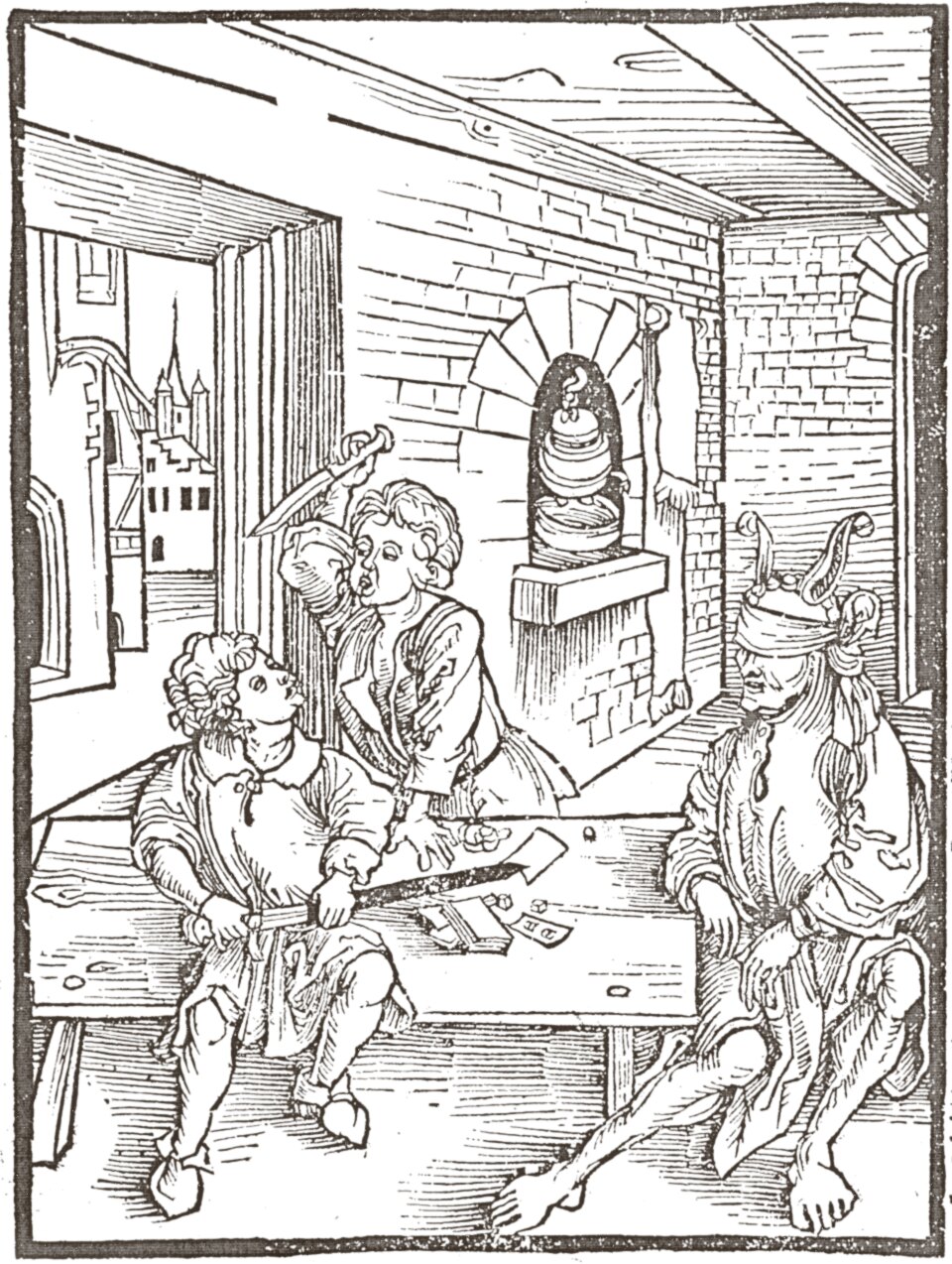
Of the erudicion of neglygent faders anenst theyr chyldren
О воспитании детейOf the Teaching of Children
Von ler der kynd❦
VIО воспитании детейOf the Teaching of Children
Тот в дурости ослеп вконец,
Кто не печётся, как отец,
Чтоб дети в строгости росли,
А тщится лишь, чтоб те могли
Без кары бегать, как в лугах
Овца — где нету пастуха;
И всё прощает сорванцам,
И мнит: не нужно кары там, —
Они, мол, не в таких летах,
Чтоб удержалось в их ушах
Всё, чем их учат и корят.
Глупец великий! Слушай, брат:
Младая память всё хранит
И всё приметит, что узрит.
Чем новый налили горшок,
Тем пахнуть будет долгий срок.
Младая ветвь послушно гнётся,
А если старую придётся
Сгибать — переломится вмиг.
От кары в меру — малый крик.
Лоза науки без скорбей
Дурь гонит из сердец детей.
Без кары редко кто учён;
Растёт всё зло, коль нет препон.
Безгрешен Илий был и прав,
Но, сыновей не наказав,
Наказан Богом был: в печали
Он и сыны в один день пали.
Детей не школят — вот один
Исток премногих Катилин.
Куда б детей был лучше нрав,
Будь им наставник, честен, прав,
Как Феникс, коего Пелей
Ахиллу выбрал из мужей.
Филипп всю Грецию прошёл,
Пока наставника нашёл;
И был царю, что всех сильней,
Дан Аристотель с юных дней.
Он у Платона много лет
Учился, тот — Сократу вслед.
Отцы же нынешних времён,
Чей взор корыстью ослеплён,
Таких берут учителей,
Что сына делают глупей
И шлют домой сего детину
Дурней, чем вышел, вполовину.
И нечему дивиться тут:
От дурней дурни и растут.
Старик Кратет твердил не раз:
Будь власть — он крикнул бы тотчас
Во весь свой голос: «Дурачьё!
Добро вы копите своё,
Детей забыли — тех как раз,
Кому копите про запас.
Зато вам плата под конец:
Когда в совет пойдёт юнец,
Где надо к чести бы стремиться, —
Он к жизни той спешит пуститься,
К какой привык он с юных лет».
Тогда отцу прибудет бед,
И ест себя: взрастил без прока
Он пугало — одна морока.
Одни спешат в ватагу тех,
Кто Бога хулит, — тяжкий грех!
Другой берёт на шею шлюх,
Тот проиграл коня, кожух,
Четвёртый день и ночь кутит:
Вот путь, что детям тем открыт,
Кого не учат с малых лет,
Кому наставника и нет.
Исток, средина, завершенье
Всей чести — доброе ученье.
Хвалы достоин знатный род,
Да он чужой, не твой он плод:
Тебе от предков он, как дар.
Богатство — дорогой товар,
Но в нём — Фортуны произвол,
Что пляшет, словно мяч, об пол.
Красна мирская слава, но
Шатка, и с брешью заодно.
Все ценят тела красоту —
Ан ночь, и нет её в цвету.
Здоровье мило с давних пор,
А ускользает, словно вор.
Большую силу чтут, как клад,
Да хворь и годы истощат.
Итак, бессмертно и прочно
У нас ученье лишь одно.
Спросил раз Горгий: счастлив он, —
Персидский царь, чей мощен трон?
Сократ ему: «Не знаю, право,
Есть в нём ученье, доблесть нрава?»
Как будто молвил: власть и злато
Без добрых знаний — небогато.
Der ist jn narrheyt gantz erbliyndt
Der nit mag acht han / das syn kynd
Mit züchten werden vnder wißt
Und er sich sunders dar vff flyßt
Das er sie loß jrr gon on straff
Glich wie on hyrten goent die schaff
Vnd jn all muotwll über sicht /
Vnd meynt sie doerffen stroffens nicht /
Sie sygen noch nit by den joren
Das sie behalten jnn den oren
Was man jn sag / sy stroff vnd ler /
O grosser dor / merck zuo vnd hoer
Die jugent ist zuo bhaltten gering
Sie mercket woll vff alle ding /
Was man jn nüwe haefen schitt
Den selben gschmack verlont sie nitt
Eyn junger zwyg sich biegen lat /
Wann man eyn altten vnderstat
Zuo biegen / so knelt er entzwey
Zymlich stroff / bringt keyn soerglich gschrey
Die ruot der zuocht vertribt on schmertz
Die narrheyt vß des kyndes hertz
On straffung selten yemans lert
Als übel wechßt das man nit wert
Hely was recht vnd lebt on sünd
Aber das er nit strofft syn kynd
Des strofft jn gott / das er mit klag
Starb / vnd syn suen vff eynen tag /
Das man die kynd nit ziehen will
Des fyndt man Cathelynen vil
Es stünd yetz vmb die kynd vil baß
Geb man schuolmeister jnn / als was
Phenix / den Peleus synem suon
Achilli suocht / vnd zuo wolt duon
Philippus durch suocht kriechen landt
Biß er sym suon eyn meister fandt
Dem groesten künnig jn der welt
Wart Aristoteles zuo geselt
Der selb Platonem hort lang jor
Vnd Plato Socratem dar vor
Aber die vaetter vnser zytt
Dar vmb das sie verblent der gyt
Nemen sie vff soellich meister nuon
Der jn zuom narren macht eyn suon
Vnd schickt jn wider heym zuo huß
Halb narrechter dann er kam druß
Des ist zuo wundern nit dar an
Das narren narrecht kynder han
Crates der alt sprach / wan es jm
Zuo stuond / wolt er mit heller stym
Schryen / jr narren vnbedacht
Ir hant vff guot samlem groß acht
Vnd achten nit vff üwer kynd
Den jr soellich richtuom samlen syndt
Aber üch wirt zuo letst der lon
Wann üwer suen jn rott soent gon
Vnd stellen zuocht vnd eren nach
So ist jnn zuo dem wesen gach
Wie sie von jugent hant gelert
Dann wirt des vatters leydt gemert
Vnd fryßt sich selbst das er on nutz
Erzogen hat eyn wynterbutz
Ettlich duont sich in buoben rott
Die laestern vnd geschmaehen gott
Die andern hencken an sich saeck
Dise verspielen roß vnd roeck
Die vierden prassen tag vnd nacht
Das würt vß solchen kynden gmacht
Die man nit jn der iugent zücht
Vnd mit eym meister wol versicht
Dann anfang / mittel / end / der ere
Entspringt alleyn vß guoter lere
Eyn loeblich ding ist edel syn
Es ist aber froembd / vnd nit dyn
Es kumbt von dinen eltern har /
Ein koestlich ding ist richtum gar
Aber des ist des gelückes fall
Das vff vnd ab dantzt wie eyn ball /
Eyn hübsch ding der welt glory ist /
Vnstantbar doch / dem allzyt gbrist /
Schonheit des libes man vil acht
Wert etwan doch kum über nacht /
Glich wie gesuntheyt ist vast lieb
Vnd stielt sich ab doch wie eyn dieb
Groß sterck / acht man für koestlich hab
Nymbt doch von kranckheyt / alter ab /
Dar vmb ist nützt vndoetlich mer
Vnd bliblich by vnß dann die ler
Gorgias frogt / ob sellig wer
Von Persia der maechtig her
Sprach Socrates / ich weiß noch nüt
Ob er hab ler vnd tugent üt /
Als ob er sprech / das gwalt vnd golt
On ler der tugent nützet solt
A myserable Fole euermore shal he be.
A wretche vnauysed, and a Catyf blynde.
Whiche his chyldren fawtes forseth nat to see
Hauynge no care for to induce theyr mynde
To godly vertue: and vyce to leue behynde.
For whyle they ar yonge fereful and tender of age
Theyre vyce and foly is easy to asswage.
Two dyuers sortes of these foles may we fynde.
By whome theyr chyldren ar brought to confusion.
The one is neglygent. the other is starke blynde.
Nat wyllynge to beholde his childes yl condicion.
Whyle he is in youthe: But for a conclusion
He is a Fole that wyl nat se theyr vyce.
And he that seyth: and wyl it nat chastyce.
Alas thou art a cursed counselloure
To wanton youth that tender is of age
To let them wander without gouernoure
Or wyse mayster, in youthes furious rage
Get them a mayster theyr foly to asswage
For as a herdles flocke strayth in Jepardy
So children without gyde wandreth in foly.
To moche lyberty pleasoure and lycence
Gyuen vnto youth, whether it be or age
Right often causyth great inconuenyence
As ryot mysrule with other sore damage
Theyr londe and goodes solde or layde to gage
But thou folysshe father art redy to excuse
Thy yonge children of theyr synne and abuse
Thou sayst they ar ouer tender to eschewe
Theyr folysshe maners and they haue no skyll
To knowe the wayes of goodnes or vertue
Nor to discerne what is gode, what is yll
Thou blynde dodart these wordes holde thou styll
Theyr youth can nat excuse thy folysshenes
He that can yll as well myght lerne goodnes
A yonge hert is as apt to take wysdome
As is an olde, and if it rotyd be
It sawyth sede of holy lyfe to come
Also in children we often tymes se
Great aptness outwarde and syne of grauyte
But fyll an erthen pot first with yll lycoure
And euer after it shall smell somwhat soure
So youth brought vp in lewdnes and in sin
Shall skant it shrape so clene out of his mynde
But that styll after some spot wyll byde within
A lytell twygge plyant is by kynde
A bygger braunche is harde to bowe or wynde
But suffer the braunche to a byg tre to growe
And rather it shall brake than outher wynde or bowe
Correct thy childe whyle he is lyke a twygge
Soupyll and plyant, apt to correccion
It wyll be harde forsoth whan he is bygge
To brynge his stubron herte to subieccion
What hurtyth punysshement with moderacion
Unto yonge children, certaynely no thynge
It voydeth vyce, gettynge vertue and cunnynge
Say folysshe fader haddest thou leuer se
Thy sonnes necke vnwrested wyth a rope.
Than with a rod his skyn shulde brokyn be.
And oft thou trustest: and hast a stedfast hope
To se thy son promoted nere as hye as is the Pope
But yet perchaunce mourne thou shalt ful sore.
For his shameful ende: fortuned for lacke of lore.
Some folowe theyr chyldrens wyl and lewde plesour
So grauntinge them theyr mynde: that after it doth fal
To theyr great shame: they sorowe and dolour
As dyd to Priamus a Kynge Imperial
Whiche suffred his men: his son chefe of them al
By force from Grece to robbe the fayre Helayne.
Wherby both Fader and son were after slayne.
With noble Hector and many thousandes mo.
The Cyte of Troy vnto the ground clene brent.
I rede in the Cronycles of the Romayns also
Howe Tarquyne the proude had shame and punysshment
For rauysshynge chaste Lucres agaynst hyr assent.
Wherfore hyrselfe she slewe hyr seynge thus defiled.
For the which dede this Tarquyn was exiled,
From Rome: wandrynge in the Costes of Italy.
Dyd nat the traytour Catelyne also conspyre
And many mo sworne to his cruel tyranny
Agaynst the Romans to oppresse theyr Impyre,
But he and all his were murdred for theyr hyre,
And nat vnworthely. Beholde wherto they come
Which ar nat enfourmed in youth to ensue wysdom.
The son oft foloweth the faders behauour
And if the fader be discrete and vertuous.
The son shal suche wayes practyse both day and hour.
But if that the fader be lewde and vicious
By falshode lyuynge: and by wayes cautelous.
The son also the same wayes wyl ensue
And that moche rather than goodnes or vertue
Therfore it nedeth that better prouysion.
Were founde for youthe by sad and wyse counsayle
Far from theyr faders of this condicion.
And other lewde gydes which myght theyr myndes assayle
Greuously wyth syn. So were it theyr auayle
From theyr faders frawde and falshode to declyne
And them submyt to some lawdable mannys doctryne.
Peleus, somtyme a noble and worthy kynge
Subdued Achylles vnto the doctryne
Of phenix whiche was both worthy and cunnynge
Wherfore Achyllys right gladly dyd enclyne
With his hert and mynde vnto his disciplyne
Wherby his name so noble was at the last
That all Asy in worthynes he past
Ryght so Philippus a kynge worthy of name
Ouer all Grece made great iniquicion
To fynde one wyse, sad and laudable of fame
To Alexander his sonne for to gyue Instruccion
Founde was great Aristotyl at the conclusion
Disciple of Plato. whiche in euery Science.
Infourmed this chylde with parfyte diligence.
Whiche Alexander afterward had so great dignyte.
What by his strength, his cunnynge, and boldenes.
That he was lorde both of Londe and See.
And none durst rebel aganst his worthynes.
Lo here the lawde, the honour, and nobles.
Which dothe procede of vertue and doctryne
But few ar the faders that nowe hereto inclyne
Fewe ar that forceth nowe adayes to se
Theyr chyldren taught: or to do any cost
On som sad man, wyse, and of auctorite:
Al that is theron bestowed thynke they loste.
The folyssh Fader oft tymes maketh great boste.
That he his son to habundant riches shal auance
But no thynge he speketh of vertuous gouernance.
The feder made but smal shyft or prouysion.
To induce his Son by vertuous doctryne.
But whan he is dede and past: moche les shal the son
To stody of grace his mynde or hert inclyne.
But abuse his reason: and from al good declyne.
Alas folysshe faders gyue your aduertence
To Crates complaynt comprysed in this sentence.
If it were graunted to me to shewe my thought
Ye follysshe faders Caytifes I myght you cal
Whiche gather riches to brynge your chylde to nought.
Gyuynge him occasion forto be prodigal.
But goode nor cunnynge shewe ye hym none at all.
But whan ye drawe to age, ye than moste comonly.
Sorowe for your suffrance. But without remedy.
An olde sore to hele is oft halfe incurable
Ryght so ar these Chyldren roted in myschefe
Some after euer lyueth a lyfe abhomynable
To all theyr Kyn great sorowe and reprefe.
The one is a murderer the other a fereles thefe,
The one of god nor goode man hath no fors ne care.
Another so out wasteth that his frendes ar ful bare.
Some theyr londe and lyuelode in riot out wasteth,
At cardes, and, tenys, and other vnlawful gamys.
And some wyth the Dyce theyr thryft away casteth.
Some theyr soule damnes, and theyr body shames.
With flesshly lust: which many one dyffamys.
Spendynge the floures of youth moche vnthryftely.
On dyuers Braunches that longe to Lechery.
Another delyteth hymselfe in Glotony.
Etynge and drynkynge without maner, or mesure:
The more that some drynke: the more they wax drye.
He is moste Galant whyche lengest can endure.
Thus without mesure ouercharge they theyr nature.
So that theyr Soule is loste theyr body and goode is spent.
For lacke of doctryne, Norture and punysshment.
Se here playne prose, example and euydence
Howe youthe which is nat norysshed in doctryne.
In age is gyuen vnto al Inconuenyence.
But nought shall make youthe soner forto inclyne.
To noble maners: nor Godly dysciplyne:
Than shal the doctryne of a mayster wyse and sad:
For the rote of vertue and wysdome therby is had.
Without dout Noblenes is moche excellent
Whiche oft causeth youth to be had in great honour.
To haue the name, and lawde they ar content.
Thoughe it be nat gotten by theyr owne labour.
But what auayleth them this lewde obscure errour
Of suche hye byrthe them self to magnyfy.
Sythe they defyle it with vice and Uilany.
Why art thou proude thou foul of that nobles
Whyche is nat gotten by thyne owne vertue.
By thy goode maners, wyt nor worthynes:
But this forsothe oft tymes fynde I true
That of a goode beste, yl whelpes may weshewe.
In lyke wyse of a Moder that is bothe chast and goode.
Often is brought forth a ful vngracious Brode.
But though the childe be of lewde condicion
And of his nature frowarde and varyable
If the fader be slacke in the correccion
Of his childe, he onely is culpable
Whiche wyll nat teche hym maners commendable
Thus is the fader a fole for his suffraunce
And the sone also for his mysgouernaunce
The enuoy
Auoyd faders your fauour and suffraunce
Anenst your children in theyr faute and offence
Reduce ye clerely vnto your remembraunce
That many a thousande inconuenyence
Haue children done by theyr faders negligence
But to say trouth brefely in one clause
The fader's fauour onely is the cause
Alexander Barclay, The Shyp of Folys of the Worlde, London, 1509 — вольное переложение королевской строфой, с «посланиями» переводчика.a free version in rhyme royal, with the translator’s own envoys.
· VI ·