Das NarrenschiffXVII
Богач, что сам добром согрет,А нищим шлёт один лишь «нет», —Услышит сам такой ответ.
Wer guot hat / vnd ergetzt sich mitVnd nit dem armen do von gyttDem wirt verseit / so er ouch bitt
Yet fynde I folys of another sorteWhiche gather and kepe excessyfe rychesWith it denyeng their neyghboures to conforteWhiche for nede lyueth in payne and wretchydnesSuche one by fortune may fall into distresAnd in lyke wyse after come to myseryAnd begge of other, whiche shall to hym deny.
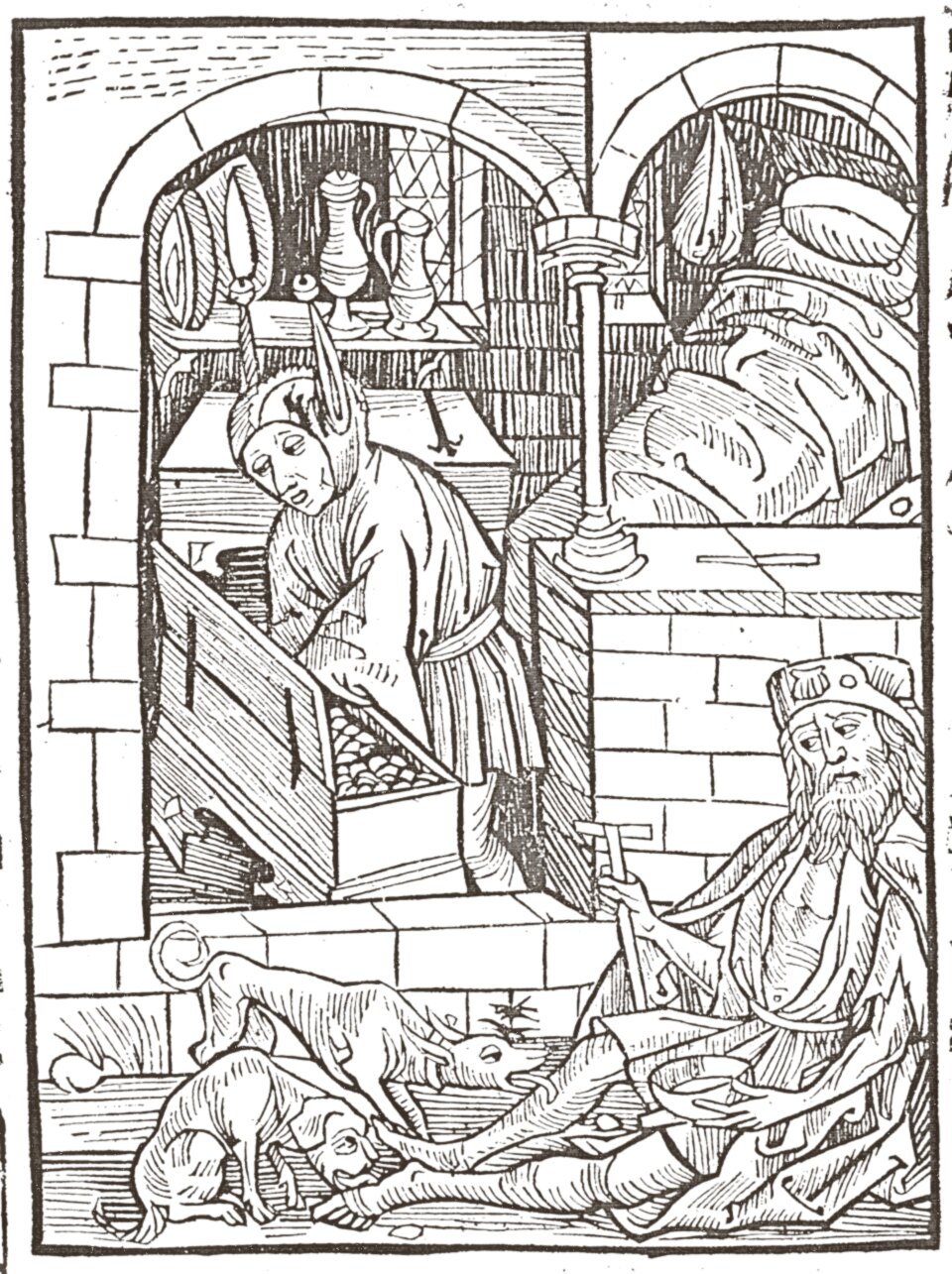
Of ryches vnprofytable
О бесполезном богатствеOf Useless Riches
Von vnnützem richtuͦm❦
XVIIО бесполезном богатствеOf Useless Riches
Нет в мире глупости дурней,
Чем чтить мошну ума сильней
И богача тянуть вперёд,
Хоть уши с бубенцом несёт.
Ему в совете место, знать:
Ему-де есть чего терять.
Тебе настолько верит свет,
Сколь у тебя в мошне монет.
Вперёд всех сударь Грош идёт.
Будь Соломон жив в этот год —
В совет его б не звал народ,
Когда б он бедным был ткачом
И с тощим жил бы кошельком.
Богатых к трапезе зовут,
Дичь, птицу, рыбу им несут,
Им льстят без меры, всех добрей,
А бедный мнётся у дверей
В «поту» — от стужи всё синей.
Богатому: «Откушай, пан!»
О Грош, почёт тебе воздан!
Ты всех к себе расположил:
Кто с грошем — тьму друзей нажил.
Всяк гнётся, всяк в родню идёт.
Жених сыскался — наперёд
Вопрос: «А много ль за душой?»
О чести речи никакой,
Ни об уме, ни об ученье:
Из цеха дурней — предпочтенье,
Лишь было б в молоко крошить,
А там хоть сводне сыном быть.
Наука, честь и ум — всё вздор,
Коль в кошеле один простор.
Кто слух для бедного запрёт —
Стучись, и Бог не отопрёт.
Die groeßst dorheyt jn aller welt
Ist / das man ertt für wißheyt gelt /
Vnd zücht harfür eyn richen man
Der oren hat / vnd schellen dran
Der muoß allein ouch jn den rat
Das er vil zuo verlieren hat /
Eym yeden gloubt so vil die welt
Als er hat jnn synr taeschen gelt
Her pfenning der muoß vornen dran
Wer noch jn leben Salomon
Man ließ jn / jnn den rat nit gon
Wann er eyn armer weber wer
Oder jm stünd syn seckel ler /
Die richen ladt man zuo dem tisch
Vnd bringt jnn wiltpret / vogel / visch /
Vnd duot on end mit jnn hofiern
Die wile der arm stat vor der tueren
Vnd schwitzet / das er moecht erfrieren /
Zuom richen spricht man / essen herr /
O pfenning / man duet dir die ere
Du schaffst / daß vil dir günstig sint
Wer pfening hat / der hat vil fründ
Den grueßt vnd schwagert yeder man /
Wolt eyner gern ein ee frow han /
Die erst frag ist / was hat er doch /
Man fragt der erberkeit / nym noch
Oder der wißheyt / ler / vernuonfft
Man suocht eyn vß der narren zunfft
Der jnn die milch zuo brocken hab
Ob er joch sy eyn koeppels knab
All kunst / ere / wißheit / ist vmb sunst
Wo an dem pfening ist gebrust
Wer syn or / vor dem armen stopfft
Den hoert got nit / so er ouoch klopfft
It is great foly, and a desyre in vayne
To loue and worshyp ryches to feruently
And so great laboure to take in care and payne
Fals treasoure to encrease and multyply
But yet no wonder is it sertaynly
Syth he that is ryche hath gretter reuerence
Than he that hath sadnes wysdom and scyence
The ryche mannes rewardes stande in best degre
But godly maners we haue set clene asyde
Fewe loueth vertue, but fewer pouertye.
Fals couetyse his braunches spreddeth wyde
Ouer all the worlde, that pety can nat byde
Among vs wretches banysshed is kyndnes
Thus lyeth the pore in wo and wretchydnes
Without conforte and without auctoryte
But he only is nowe reputed wyse
Whiche hath ryches in great store and plente.
Suche shall be made a sergeant or Justyce
And in the Court reputed of moste pryse
He shall be callyd to counseyll in the lawe
Though that his brayne be skarsly worth a strawe
He shall be Mayre baylyfe or constable
And he onely promotyd to honoure
His maners onely reputed ar laudable
His dedys praysyd as grettest of valoure
Men laboure and seke to fall in his fauoure
He shall haue loue, echone to hym shall sue
For his ryches, but nought for his vertue
Se what rewardes ar gyuen to ryches
Without regarde had to mannys condycyon
A strawe for cunnynge wysdome and holynes
Of ryches is the first and chefe questyon
What rentes what londes howe great possessyon
What stuffe of housholde what store of grotz and pens
And after his gode his wordes hath credence.
His wordes ar trouth men gyue to them credence
Thoughe they be falsly fayned and sotell
But to the pore none wyll gyue aduertence
Though that his wordes be true as the gospell
Ye let hym swere by heuyn and by hell
By god and his sayntes and all that god made
Yet nought they beleue that of hym is sayde
They say that the pore men doth god dispyse
Thouhe they nought swere but trouth and veryte
And that god punyssheth them in suche wyse
For so dispysynge of his hye maiestye
Kepynge them for their synnes in pouerte
And theyr ryche exaltyth by his power and grace
To suche ryches, worldly pleasour and solace
The ryche ar rewarded with gyftis of dyuerse sorte
With Capons and Conyes delycious of sent
But the pore caytyf abydeth without confort
Though he moste nede haue: none doth hym present
The fat pygge is baast, the lene cony is brent
He that nought hathe, shall so alway byde pore
But he that ouer moche hath, yet shall haue more
The wolfe etis the shepe, the great fysshe the small
The hare with the houndes vexed ar and frayde
He that hath halfe nedes wyll haue all
The ryche mannes pleasour can nat be denayde
Be the pore wroth, or be he well apayde
Fere causeth hym sende vnto the ryches hous
His mete from his owne mouth, if it be delycious
And yet is this ryche caytyf nat content
Though he haue all yet wolde he haue more.
And though this gode can neuer of hym be spent
With nought he departyth to hym that is pore
Though he with nede harde vexed were and sore.
O cursyd hunger o mad mynde and delyte.
To laboure for that whiche neuer shall do profyte
Say couetous caytyfe what doth it the auayle
For to haue all and yet, nat to be content
Thou takest nat this sore laboure and trauayle
To thy pleasoure but to thy great turment
But loke therof what foloweth consequent
Whan thou art dede and past this wretchyd lyfe
Thou leuyst behynde brawlynge debate and stryfe
To many one ryches is moche necessary
Whiche can it order right as it ought to be
But vnto other is it vtterly contrary
Whiche therwith disdayneth to socoure pouerte.
Nor them relefe in theyr aduersyte
Suche shall our lorde sore punysshe fynally
And his petycion rightwysly deny
Barklay to the folys
Ye great estatis and men of dignyte
To whome god in this lyfe hath sent ryches
Haue ye compassion, on paynfull pouertye
And them conforte in theyr carefull wretchydnes
God hym loueth and shall rewarde doutles
Whiche to the nedy for hym is charitable
With heuenly ioy, whiche treasour is endeles
So shall thy riches to the be profytable.
Alexander Barclay, The Shyp of Folys of the Worlde, London, 1509 — вольное переложение королевской строфой, с «посланиями» переводчика.a free version in rhyme royal, with the translator’s own envoys.
· XVII ·