Das NarrenschiffXVIII
За парой зайцев тот бежит,Кто двум хозяевам служитьИ дел сверх силы взять спешит.
Der vocht zwen hasen vff eyn molWer meynt zweyn herren dienen wolVnd riechten vß me dann er sol
A fole he is and voyde of reasonWhiche with one hounde tendyth to takeTwo harys in one instant and seasonRightso is he that wolde vndertakeHym to two lordes a seruaunt to makeFor whether, that he be lefe or lotheThe one he shall displease, or els bothe.
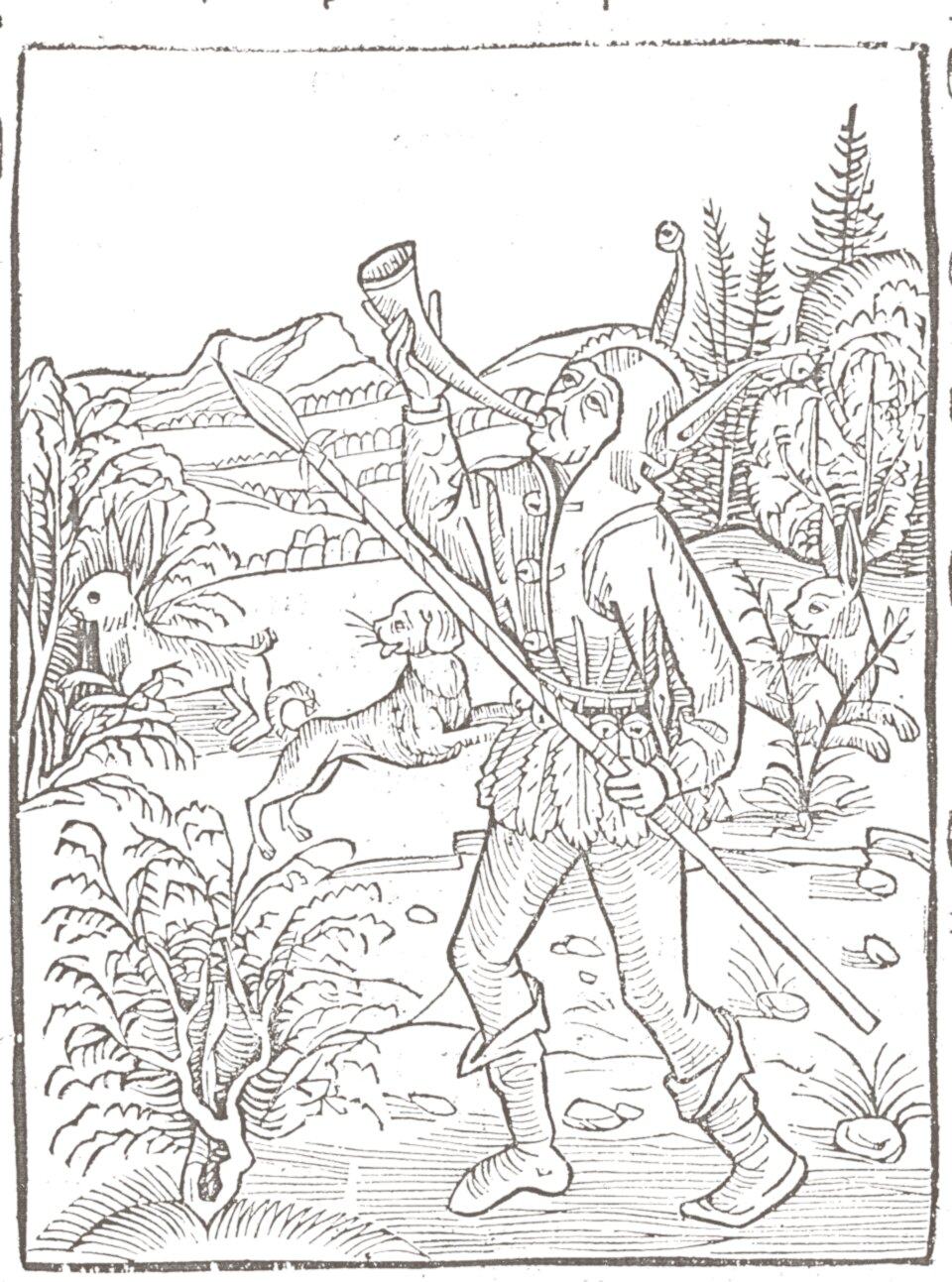
Of hym that togyder wyll serue two maysters
О службе двум господамOf Serving Two Masters
Von dienst zweyer herren❦
XVIIIО службе двум господамOf Serving Two Masters
Дурак, кто и с мирской толпой,
И с Богом хочет быть слугой:
Где у слуги хозяев двое,
Служенье выйдет никакое.
Беднеет часто мастер тот,
Что сто ремёсел враз ведёт.
Кто хочет с псом одним зараз
Двух зайцев взять в единый час,
Тому и одного едва ли,
А чаще и того не дали.
Кто с многих арбалетов метит,
Тот редко цель стрелою встретит.
Кто много должностей берёт,
Всем должного не воздаёт.
Кто должен быть и там, и здесь,
Нигде не будет толком весь.
Кто хочет всякому быть мил,
Дохни, чтоб грел и холодил,
Глотай и то, что вкус претит,
Тянись, как твой покров велит,
Под локоть всем подушку класть
Умей, чтоб мягко было всласть,
Всем лбы умаслить, всем польстить
И никого не рассердить.
Да сладок многих мест доход:
Где углей больше — жар печёт.
А кто отведал много вин,
Тому хорош не всяк кувшин.
Простая ковка — скорый труд;
Простое мудрецы и чтут.
Кто служит одному, да верно,
Того слугою чтут примерным.
А сдох несытым тот осёл,
Что вечно к новым барам шёл.
Der ist eyn narr der vnderstot
Der welt zuo dienen / vnd ouch gott
Dann wo zwen herren handt eyn knecht
Der mag jn nyemer dienen recht
Gar offt verdürbt ein hantwercks man
Der vil gewaerb vnd hantwerck kan
Wer jagen wil / vff eyn stund
Zwen hasen vohen / mit eym hund
Dem würt ettwan kum eyner wol
Gar dick würt jm gantz nit zuo mol
Wer schiessen vß vil armbrust will
Der trifft kum etwan wol das zyl
Wer vff sich selbst vil aempter nympt
Der mag nit tuon das yedem zymbt
Der hie muoß syn vnd anderswo
Der ist reht weder hie noch do
Wer tuon will das eym yeden gfalt
Der muoß han ottem warm vnd kalt
Vnd schlucken vil das jm nit schmeckt
Vnd strecken sich noch der gedeck
Vnd künnen pfulwen vnderstrowen
Eym yeden vndern ellenbogen
Vnd schmieren yedem wol syn styrn
Vnd luogen das er keynen erzürn
Aber vil aempter schmecken woll
Man wermbt sich bald by grossem kol
Vnd wer vil win versuochen duot
Den dunckt doch nit eyn yeden guot
Dan schlecht geschmydt / jst bald bereyt
Dem wisen liebt eynfaltikeyt
Wer eynem dient / vnd duot jm recht
Den halt man für eyn truwen knecht
Der esel starb / vnd wart nye satt
Der all tag nuwe herren hatt
A fole also he is withouten doute
And in his porpose sothly blyndyd sore
Whiche doth entende labour or go aboute
To serue god, and also his wretchyd store
Of worldly ryches: for as I sayde before
He that togyder wyll two maysters serue
Shall one displease and nat his loue deserue
For he that with one hownde wol take also
Two harys togyther in one instant
For the moste parte doth the both two forgo
And if he one haue: harde it is and skant
And that blynde fole mad and ignorant
That draweth thre boltis atons in one bowe
At one marke shall shote to hye or to lowe
Or els to wyde, and shortly for to say
With one or none of them he strykis the marke:
And he that taketh vpon hym nyght or day
Laboures dyuers to chargeable of warke.
Or dyuerse offycis: suche wander in the darke
For it is harde to do well as he ought
To hym that on dyuerse thynges hath his thought
With great thoughtes he troubleth sore his brayne
His mynde vnstable, his wyt alway wandrynge:
Nowe here nowe there his body labours in payne
And in no place of stedfast abydynge.
Nowe workynge now musynge now renynge now rydynge
Now on see nowe on londe, than to se agayne
Somtyme to Fraunce, and nowe to Flaunders or Spayne
Thus is it paynfull and no thynge profytable
On many labours a man to set his mynde
For nouther his wyt nor body can be stable
Whiche wyll his body to dyuers chargis bynde
Whyle one goth forwarde the other bydes behynde
Therfore I the counseyll for thyne owne behoue
Let go this worlde and serue thy lorde aboue
He that his mynde settyth god truly to serue
And his sayntes: this worlde settynge at nought
Shall for rewarde euerlastynge ioy deserue
But in this worlde, he that settyth his thought
All men to please, and in fauour to be brought
Must lout and lurke, flater, lawde, and lye:
And cloke a knauys counseyll, though it fals be
If any do hym wronge or iniury
He must it suffer and pacyently endure
A dowble tunge with wordes lyke hony
And of his offycis if he wyll be sure
He must be sober and colde of his langage
More to a knaue, than to one of hye lynage
Oft must he stoupe his bonet in his honde
His maysters backe he must oft shrape and clawe
His breste anoyntynge, his mynde to vnderstonde
But be it gode or bad therafter must he drawe
Without he can Jest he is nat worth a strawe.
But in the meane tyme beware that he none checke
For than layth malyce a mylstone in his necke
He that in court wyll loue and fauour haue
A fole must hym fayne, if he were none afore
And be as felowe to euery boy and knaue
And to please his lorde he must styll laboure sore
His manyfolde charge maketh hym coueyt more
That he had leuer serue a man in myserye
Than serue his maker in tranquylyte
But yet whan he hath done his dylygence
His lorde to serue as I before haue sayde
For one small faute or neglygent offence
Suche a displeasoure agaynst hym may be layde
That out is he cast bare and vnpuruayde.
Whether he be gentyll, yeman grome or page
Thus worldly seruyce is no sure herytage
Wherfore I may proue by these examples playne
That it is better more godly and plesant
To leue this mondayne casualte and payne
And to thy maker one god to be seruaunt
Whiche whyle thou lyuest shall nat let the want
That thou desyrest iustly, for thy syruyce
And than after gyue the, the ioyes of Paradyse.
Barklay to the folys
Alas man aryse out of Idolatry.
Worshyp nat thy ryches nor thy vayne treasoure
Ne this wretchyd worlde full of mysery.
But lawde thy maker and thy sauyour
With fere, mekenes, fayth, glory, and honoure
Let thy treasoure onely in his seruyce be
And here be content with symple behauoure
Hauynge in this lorde trust and felycyte
Alexander Barclay, The Shyp of Folys of the Worlde, London, 1509 — вольное переложение королевской строфой, с «посланиями» переводчика.a free version in rhyme royal, with the translator’s own envoys.
· XVIII ·