Das NarrenschiffXXI
Кто путь указывает всем,А сам в болоте между тем,Тот ум и толк сгубил совсем.
Wer zeygen duot eyn guote stroßVnd blibt er jn dem pfütz vnd moßDer ist der synn vnd wißheyt bloß
He lacketh reason and vnderstandynge toWhiche to a towne or Cyte knoweth the wayAnd shewyth other howe they may thether goHym selfe wandrynge aboute from day to dayIn myre and fen, though his iourney thether laySo he is mad whiche to other doth preche and tellThe wave to heuyn, and hym selfe goth to hell.
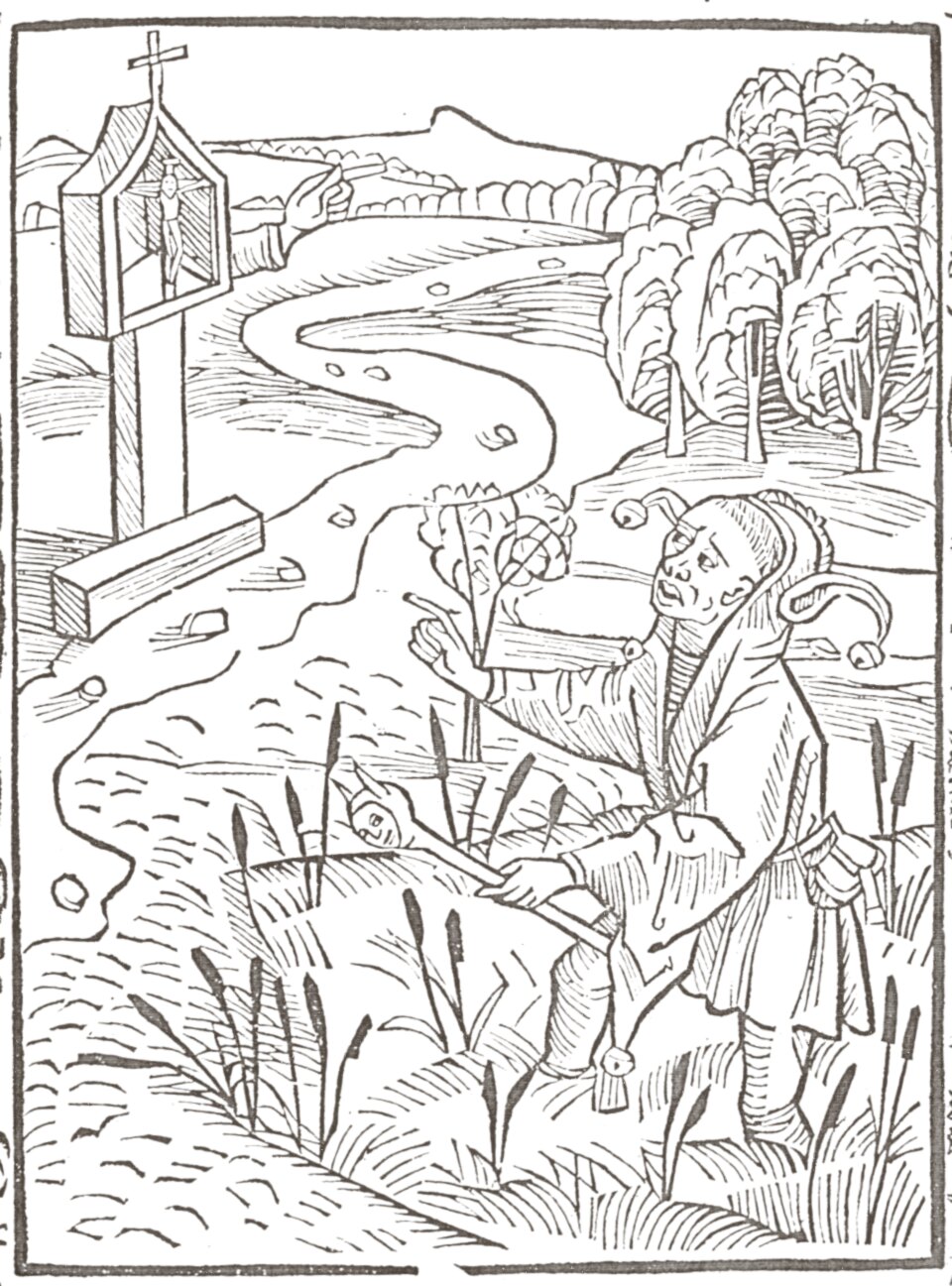
Of them that correct other and yet them selfe do nought and synne worse than they whom they so correct
Других корить, а самому грешитьOf Chiding Others and Sinning Oneself
Ander stroffen vnd selb thuͦn❦
XXIДругих корить, а самому грешитьOf Chiding Others and Sinning Oneself
Дурак, кто всех корить спешит
За то, что сам же и творит;
Тот дурень и стыда достоин,
Кто всякий шаг чернить настроен,
Клеймо на всякого кладёт,
А свой изъян не узнаёт.
Рука, что на распутье встала,
Тот кажет путь, где не бывала.
В чьём оке брус давильный встрял,
Сперва бы вынул, чем сказал:
«Брат, берегись: в твоём глазу
Соринка — видеть не могу».
Учителю плоха примета —
Весь мир корить за то и это,
Коль в нём порок сидит тот самый,
Что и в других — источник срама,
И слышит он в ответ не раз:
«Ты, врач, себя бы прежде спас!»
Иной другим даёт советы,
А для себя совета нету:
Так Месуэ и Гентилис
От той же хвори не спаслись,
Какую всем лечить сулили
И пуще всех о ней строчили.
Порок любой, чуть совершится,
Тем явственней в глаза вонзится,
Чем выше чтим и славен тот,
Кто эту скверну в мир несёт.
Сперва дела, потом ученье,
Коль хочешь славы и почтенья.
Сынов Вениамина рать
Израиль вздумал покарать,
Но был и сам повержен в прах:
Он пребывал ещё в грехах.
Der ist eyn narr der stroffen will
Das jm zuo tuon nit ist zuo vil
Der ist eyn narr vnd vngeert
Der alle sach zuom boesten kert
Vnd yedem ding eyn spett anhenckt
Vnd nit syn eygnen bresten denckt
Eyn hant die an dem waegscheid stat
Die zeygt eyn weg / den sie nit gat
Wer jn sym oug eyn trotboum trag
Der tueg jn druß / ee dan er sag
Bruoder / hab acht / ich sieh an dir
Ein aeglin die mißfellet mir
Es stat eym lerer vbel an
Der sunst kan stroffen yederman
Wann er das laster an jm hatt
Das vbel ander lüt an stat /
Vnd das er liden muoß den spruch
Herr artzt duont selber heylen üch
Mancher kan rotten ander lüt
Der jm doch selb kan raten nüt
Als Gentilis vnd Mesue
Der yeder starb am selben we
Des er meynt helffen yederman
Vnd aller meyst geschriben von /
Eyn yedes laster das geschieht
So vil schynbarer man das sieht
So vil / als der wurt hoeher geacht
Der sollichs laster hat volbraht
Duo vor die wergk / dar noch die lere
Wilt du verdienen lob vnd ere
Das volck von jsrahel hatt synn
Stroffen die suen Benyamyn
Vnd lagen sye dar nyder doch
Dann sye jn sünden worent noch
Nowe to our Nauy, a sorte maketh asaute
Of folys blynde, mad Jugys and Iniust
Whiche lyghtly noteth another mannes faute.
Chastynge that synne, whiche theyr owne mynde doth rust
By longe abydynge, and increas of carnall lust
They cloke their owne vyce synne and enormyte
Other blamynge and chastynge with moche cruelte
They mocke and mowe at anothers small offence
And redy ar a faute in them to fynde
But of theyr owne foly and inconuenyence
They se no thynge, for fully ar they blynde
Nat notynge the vyce rotyd in theyr owne mynde
Theyr greuous woundes and secrete malady
For theyr owne yll they seke no remedy
The hande whiche men vnto a Crosse do nayle
Shewyth the waye ofte to a man wandrynge
Whiche by the same his right way can nat fayle
But yet the hande is there styll abydynge
So do these folys lewde of theyr owne lyuynge
To other men shewe mean and way to wynne
Eternall ioy themselfe bydynge in synne
He sertaynly may well be callyd a sote
Moche vnauysed and his owne ennemy
Whiche in a nothers iye can spye a lytell mote
And in his owne can nat fele nor espye
A moche stycke, so is he certaynly.
Whiche noteth anothers small faute or offence
To his owne great synnes gyuynge none aduertence
Many them selfe fayne as chaste as was saynt Johnn
And many other fayne them meke and innocent
Some other as iust, and wyse as Salomon
As holy as Poule, as Job als pacyent
As sad as senecke, and as obedyent
As Abraham, and as martyn vertuous
But yet is theyr lyfe full lewde and vycious
Some lokyth with an aungels countenaunce
Wyse sad and sober lyke an heremyte
Thus hydynge theyr synne and theyr mysgouernaunce.
Under suche clokys lyke a fals ypocryte
Let suche folys rede what Cicero doth wryte
Whiche sayth that none sholde blame any creature
For his faut, without his owne lyuynge be sure
Without all spot of synne faut or offence
For in lyke fourme as a phesycyan.
By his practyse and cunnynge or scyence
The sekenes curyth of a nother man
But his owne yll nor dyseas he nat can
Relefe nor hele so doth he that doth blame
Anothers synne: he styll lyuynge in the same
Many ar whiche other can counseyll craftely
And shewe the peryll that may come by theyr synne
But them selfe they counseyll nat: ne remedy.
Nor take no waye whereby they heuyn may wynne
But lye in that vyce that they rotyd ar in
Leuynge the way that gydyth to ioy and rest
Their owne sensualyte ensuynge as a beest
Wherfore ye prestis that haue the charge and cure.
To teche and enfourme the rude comonte.
In goddys lawes groundyd in scripture
And blame all synnes sparynge no degre
Whyle ye rebuke thus theyr enormyte
Lyue so that none may cause haue you to blame
And if ye do nat: it is to your great shame
For without doute it is great vylany
A man to speke agaynst any offence
Wherin he well knowyth hym owne selfe gylty
Within his mynde and secrete conscience
Agaynst hymselfe suche one gyueth sentence
Howe god ryght iuge, by rightwyse iugement
Shulde hym rewarde with worthy punysshement
The enuoy of barklay to the folys
Ye clerkes that on your shulders here the shelde
Unto you graunted by the vnyuersyte.
Howe dare ye auenture to fyght in cristes felde
Agaynst synne, without ye clere and gyltles be
Consyder the Cocke and in hym shall ye se:
A great example, for with his wynges thryse
He betyth hym selfe to wake his owne bodye
Before he crowe, to cause other wake or ryse.
Alexander Barclay, The Shyp of Folys of the Worlde, London, 1509 — вольное переложение королевской строфой, с «посланиями» переводчика.a free version in rhyme royal, with the translator’s own envoys.
· XXI ·