Das NarrenschiffXXXIV
Иной твердит: «Я не дурак», —А сам, как прежде, гусь-простак:Ума, приличья нет никак.
Manchen dunckt / er wer witzig gernVnd ist eyn ganß doch / hür als vernDann er keyn zuocht / vernunfft / will lern
He is a fole, and so shall he dye and lyueThat thynketh hym wyse, and yet can he no thyngeAnd though he myght he wyll nat set nor gyueHis mynde to good maners, vertue nor cunnynge.So is he a fole that doth to market bryngeHis Gese fast bounde, and game or sporte to seLowsyth theyr fete, and suffreth them to fle
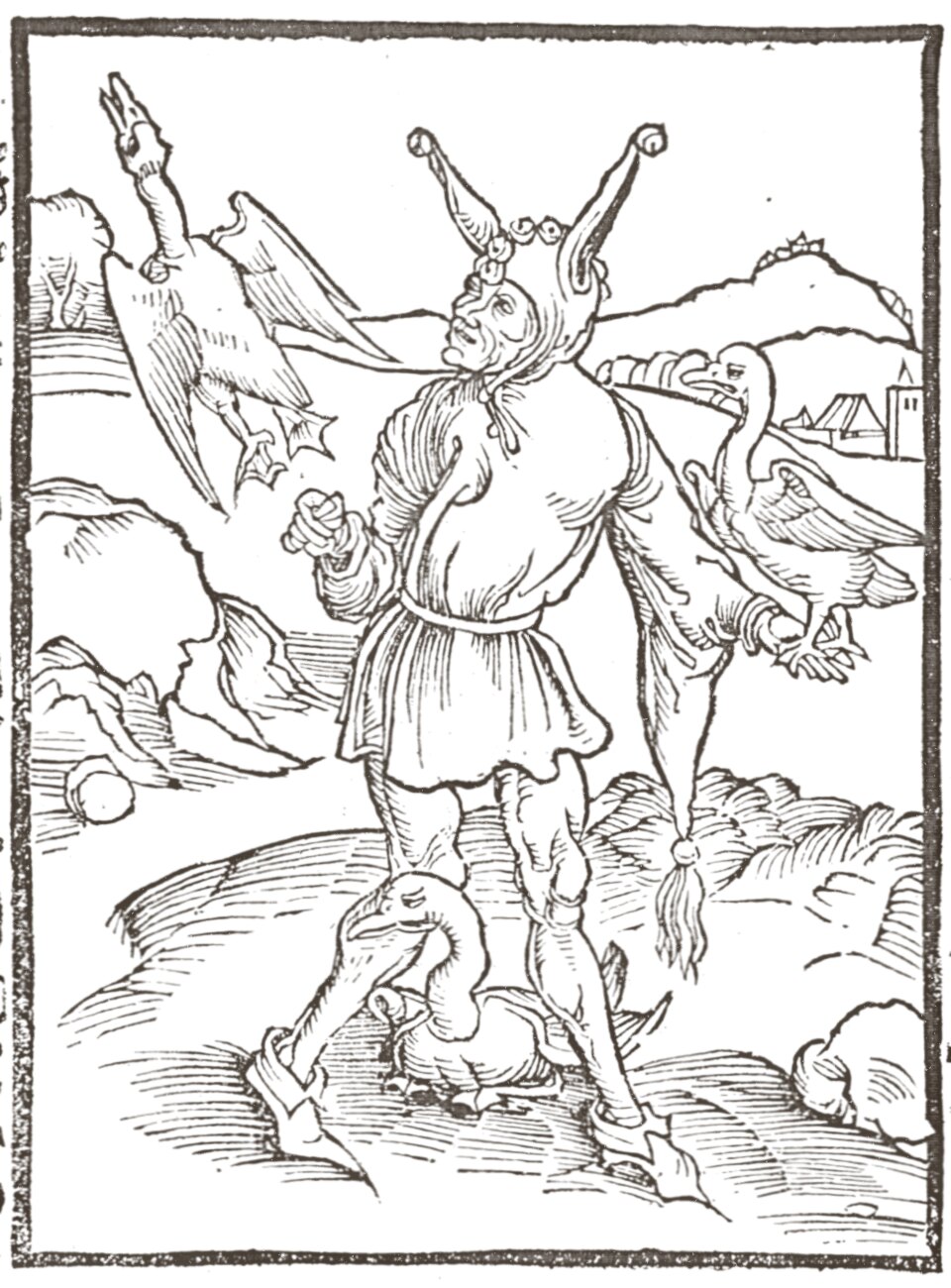
Of hym that nought can and nought wyll lerne, and seyth moche, lytell berynge away, I mene nat theuys
Дурак что нынче, что вчераA Fool This Year as Last
Narr hür als vern❦
XXXIVДурак что нынче, что вчераA Fool This Year as Last
Дурак, кто доброму внимал,
А мудрости не прибавлял,
Кто жаждет вечно много знать,
А лучше не желает стать.
Что видит, то подай ему, —
Чтоб знали дурня по тому.
Изъян у дурней испокон:
Что ново — дурень восхищён,
Да скоро новь ему скучна —
Опять диковина нужна.
Дурак, кто много стран прошёл,
А знанья, чести не обрёл:
Так гусь из дому полетел —
И с «га-га-га» домой поспел.
Не в том заслуга, что за ним —
Рим, Павия, Ерусалим;
А если там он взял урок,
Ум, знанье, мудрость превозмог, —
Вот этот путь хвалю и я.
Будь шляпа хоть в крестах твоя,
Ходи хоть жемчугом на двор, —
По мне, всё это сущий вздор,
Что исходил ты много стран,
А сам — корова и болван.
В скитаньях чести нет ничуть,
Коль знанья не дал этот путь.
Когда б не взял наук в свой срок
В Египте Моисей-пророк
И Даниил — в Халдее, там,
Не знать бы славы тем мужам.
Иной на исповедь в муке
Идёт — стать белым, налегке,
А в саже весь идёт домой,
На шее ж — жёрнов пребольшой.
Eyn narr ist der vil guottes hoert
Vnd würt syn wißheyt nit gemoert
Der allzyt bgert erfaren vil
Vnd sich dar von nit besseren wil
Vnd was er sicht will er han ouch
Das man merck / das er sy eyn gouch
Dann das ist aller narren gebrust
Was nuw ist / allzyt doren glust
Vnd hant doch bald vernüwgert dran
Vnd wellen ettwas froemdes han
Eyn nar ist / wer vil land durch fert
Vnd wenig kunst / noch tugend lert
Als ist eyn ganß geflogen vß
Vnd gagack kumbt wider zuo huß /
Nit gnuog / das eyner gewaesen sy
Zuo Rom / Hierusalem / Pauy
Aber do ettwas geleret han
Das man vernunfft / kunst / wißheyt kan
Das halt ich für eyn wandlen guott /
Dann ob voll krützer wer din huot
Vnd du künst schissen berlin kleyn
Hielt ich doch nit vff das alleyn
Das du vil land ersuochet hast
Vnd wie eyn kuo / on wißheit gast
Dann wandlen ist kein sunder ere
Es sy dann das mann sunders ler
Hett Moyses jn Egypten nüt
Vnd Daniel gelert die zyt
Do er was jn Chaldeen landt
Sie weren nit so wol erkant
Mancher kumbt melbig zuo der bicht
Der gantz wisß werden meint / vnd lycht
Vnd gatt beraemt doch wider heyn
Vnd dreyt am hals eyn mülensteyn
Saynt George to borowe our Nauy is aflote
Forth shall we sayle, thoughe that it be a payne
And moche laboure to forge a pryuate bote
For euery faute: yet shall I nat refrayne
My hande nor penne: thoughe vnsure be my gayne
My laboure sure: my wyt and reason thynne
Than leue a thynge vnendyd better nat begynne
But in this place shall I a Shyp ordayne
For that fole: that heryth great doctryne
Wherby good maners and vertue aperyth playne
He seth all goodnes, stody, and disciplyne
And yet wyll nat his mynde therto enclyne
But though he knowe what thynge is godlyest
Ouer all the worlde, yet is he styll a beest.
Many of this sort wander and compase
All studies, the wonders of the worlde to se
With vnstabyll wynges fleynge from place to place
Some seyth lawe and some dyuynyte
But for all this byde they in one degre
And if they were Asses and folys blynde before
After all these syghtes yet ar they moche more
They se moche nought lernynge, and hauynge no delyte
In wysdome nor maners vertue nor goodnes
Theyr tyme is loste, without wysdome or profyte
Without grace, or other holynes
But whyle they labour thus with besynes
If they se ought newe, or any folysshe toy
That lyghtly they lerne, and set theron theyr ioy.
By this desyre folys may knowen be
For wytles men of fleynge mynde and brayne
Ar best pleasyd with thynges of neweltye
And them to haue, they spare no cost nor payne
To dyuers londes to ren but all in vayne
And so they labour alway from londe to londe
To se all wonders, but nought they vnderstonde
Some fle to se the wonders of englonde
Some to the court to se the maners there
Some to Wallys, Holonde, to Fraunce or Irlonde
To Lybye, afryke, and besyly enquere.
Of all marueyles, and skantly worth a here
Some vnto Fraunce and some to Flaunders ren
To so the wayes, and workes of cunnynge men
And to be shorte ouer all they range
Spendynge theyr goodes about vnthryftynes
In countrees knowen, vnknowen and strange
But whan theyr iourney they homwarde must addres
As folys vnware, and vagabundes thryftles
They haue nought lerned, kept, nor with them brought
Of maners, wysdome or other thynge that is ought
They that by the se sayle to londes strange
Oft chaunge the place and planete of the fyrmament
But theyr mynde nor maners they ne turne nor chaunge
And namely suche that ar lewde and neglygent
What euer they se styll one is theyr intent
Whan he departyd, If that he were a sote
Agayne anone he comyth in the same mynde and cote
Say mad folys blynde ouersene, and worthy scorne
Fayne wolde I knowe what necessyte ye haue
To go from the place where ye were bred and borne
Into another londe to lerne to play the knaue
Your mynde vnstable sheweth playne that ye raue
Laboure nat so sore, to lerne to be a fole
That cometh by it selfe without any other scole
He that is borne in walys or small brytayne
To lerne to pyke and stele nedys nat go to Rome.
What nede we sayle to Flaunders or Almayne
To lerne glotony, syns we may it lerne at home
Suche lewdnes soon may we lerne of our wombe
He that wyll lerne falshode gyle or sotelte
May lerne it here as well as beyonde the se.
To passe the se to lerne Uenus rybawdry
It is great foly, for thou mayst lerne thy fyll
In shoppis Innes and sellers, ye somtyme openly
At saynt Martyns Westmynster or at the tour hyll
So that I fere all London, in tyme it shall fyll
For it is there kept in lyght and in darke
That the pore Stuys decays for lacke of warke
But brefely to speke, and this to set a syde
He that on vyce, and synne wyll set his entent
May lerne it in Englonde, if he at home abyde
And that of all sortis: god sende amendement
But if thou alway wyll nede be dylygent
To labour in the worlde about from place to place
Do as dyd Plato, than shalt thou fynde great grace
This godly plato laboured with dilygence
To Egypt, and other londes sparynge for no payne
Where euer he came: augmentynge his scyence
And at the last retourned to Grece agayne
His countrey natyf: with laude and name souerayne
Thus he for all his wysdome laboured besyly
But that fowle that nought can nought settyth by
Wherfore that gose that styll about wyll wander
Moche seynge and herynge, and nought berynge away
Shall home come agayne as wyse as a gander
But more fole is he that may lerne euery day
Without cost or laboure out of his owne countrey
And whan the well of wysdome renneth by theyr dore
Yet looth they the water as if that it were soure
Alexander barklay ad fatuos vt dent locum octo secundariis beate marie de oterey qui quidem prima huius ratis transtra merentur
Soft folys soft, a lytell slacke your pace
Tyll I haue space you to order by degre
I haue eyght neyghbours, that firste shall haue a place
Within this my shyp, for they most worthy be
They may theyr lernynge receyue costeles and fre.
Theyr wallys abuttynge and ioynynge to the scoles.
No thynge they can, yet nought wyll they lerne nor se
Therfore shall they gyde this one shyp of foles.
The enuoy of barklay
O vnauysyd, vnwyse and frowarde man
Great cause thou hast to morne sore and complayne
Whan no goodnes vertue nor wyt thou can
And yet to lerne thou hast scorne and dysdayne
Alas man mende, and spare no maner payne
To get wysdome, and it thou shalt nat want
Hym that nought wyll knowe, god wyll nat knowe certayne
Wo is hym that wylfully is ignorant.
Alexander Barclay, The Shyp of Folys of the Worlde, London, 1509 — вольное переложение королевской строфой, с «посланиями» переводчика.a free version in rhyme royal, with the translator’s own envoys.
· XXXIV ·