Das NarrenschiffXXXV
Кто шпорит вечно в бок осла,Тот на уши сползёт с седла:Гневливость — дурню похвала.
Wer staets jm esel hat die sporenDer juckt jm dick biß vff die orenBald zürnen / stat wol zuo eym doren
Assys erys for our folys a lyuray isAnd he that wyll be wroth for a thynge of noughtOf the same leuray is nat worthy to mysFor who that by wrathe to suche a wyll is broughtTo sle his Asse for hir pas slowe and softShall after his fury, repent his mad folyFor to a clere mynde, mad wrathe is ennemy
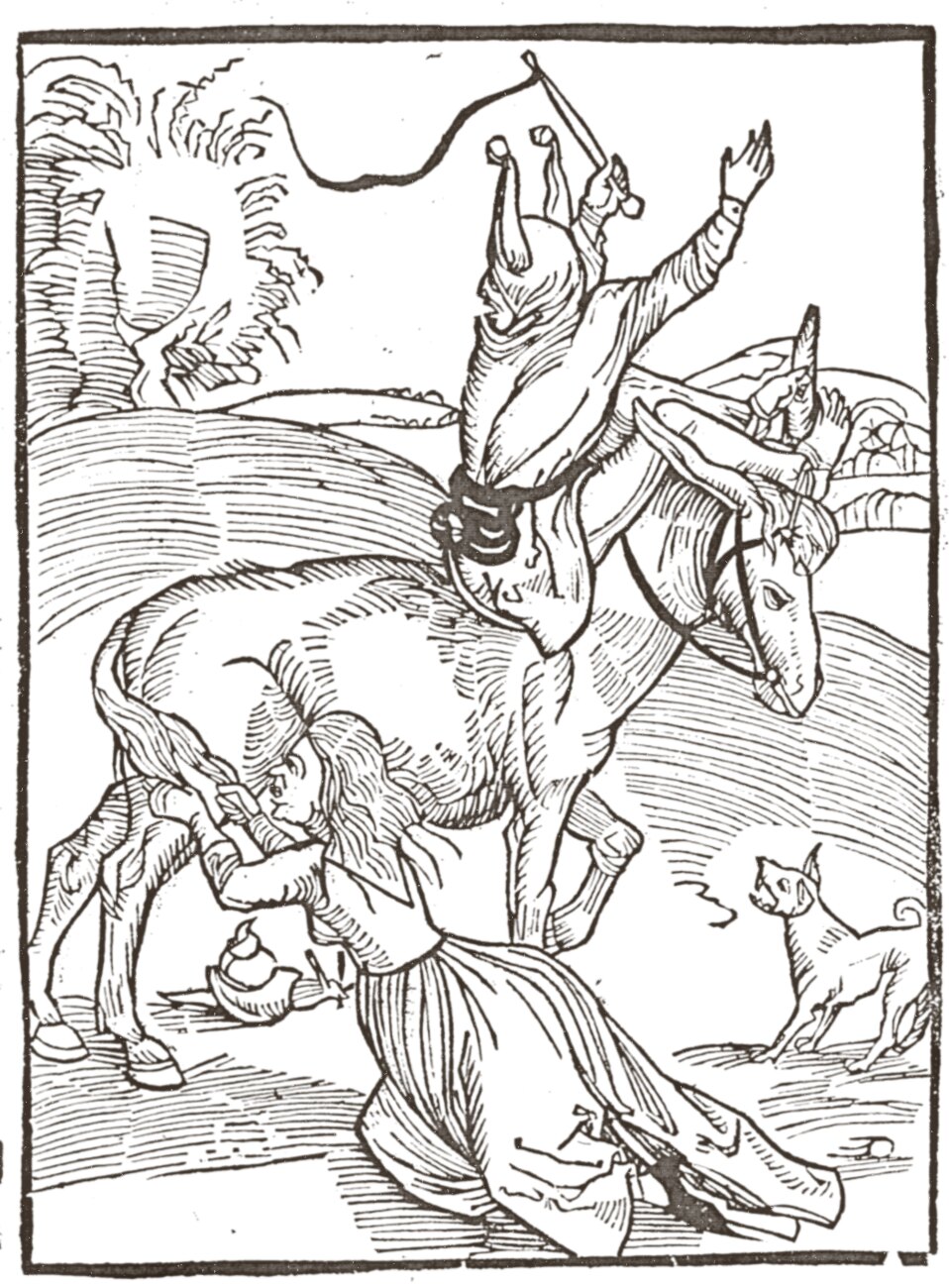
Of great wrathe, procedynge of small occasyon
О скором гневеOf Ready Anger
Von lichtlich zürnen❦
XXXVО скором гневеOf Ready Anger
Тот дурень на осле сидит,
Кто попусту на всех сердит,
На всех рычит, как пёс цепной,
И доброй речи — ни одной.
Из азбуки он знает «эр»
И мнит, что страшен всем без мер
И злиться волен, как взбредёт.
А добрый малый речь ведёт:
«Ишь, как себя терзает шут!
Знать, беды дурней нам несут».
Он мнит: глупцов не знал народ,
Лишь Ганс Ослиноух — не в счёт.
Гнев разум мудрому мутит:
Не знает гневный, что творит.
Архит, слугою оскорблён,
Сказал виновному так он:
«Тебе б я спуску не давал,
Когда бы гнев в себе не знал».
То ж у Платона раз стряслось;
В Сократе гнева не нашлось.
Кто, нетерпеньем одержим,
Гневлив, — и грех с виной за ним.
Терпенье боль невзгод уймёт,
Речь мягкая и твердь пробьёт.
Нетерпеливость — благ конец:
Кто гневен, тот и не молец.
Гнев скорый от себя гони:
Он дурням лишь одним сродни.
Медведя легче гнев снести,
Чьих медвежат уж не спасти,
Чем то, что сделает глупец,
Вложивший в дурь свой ум вконец.
Мудрец всё делает ладком,
А скорый — на осле верхом.
Der narr den esel allzyt ryt
Wer vil zürnt / do man nuot vmb gyt
Vnd vmb sich schnauwet als eyn hunt
Keyn guetig wort gat vß sym mundt
Keyn buochstab kan er / dann das R
Vnd meynt man soll jn voerchten ser
Das er müg zürnen wann er well
So spricht eyn yeder guotter gsell
Wie duot der narr sich so zerryssen
Vnglück will vnß mit narren bschyssen
Er went man hab keyn narren vor
Gesehen / dann hans esels or /
Der zorn hyndert eyns wysen muot
Der zornig weißt nit was er duot /
Archytas / do jm vnrecht gschach
Von synem knecht / zuo jm er sprach /
Ich soltt das yetz nit schencken dir
Wann ich nit merckt eyn zorn jn mir
Des glichen Plato ouch geschach
Keyn zorn von Socrates man sach /
Waen lycht syn zorn jn vngedult
Zücht / der velt bald jn sünd vnd schuld /
Gedult / senfft widerwertikeyt
Eyn weiche zung bricht hertikeyt
All tugend / vngedult verschütt
Wer zornig ist / der bettet nit
Vor schnellem zorn / dich alzyt huet
Dann zorn wont jn eyns narren gmuet
Vil ringer wer eyns beren zorn
Der joch syn jungen hett verlorn
Dann tulden / das eyn narr dir duot
Der vff syn narrheyt setzt syn muot
Der wiß man duot gemach allzyt
Eyn gaeher / billich esel rytt
Come nere, ye wrathfull men, take your rowme and place
Within our shyp, and to slake our hastynes
Mount on an Asse slowe of hir gate and pace
Syns troublous wrath, in you, styreth this madnes
Often lacke of myght asswagyth cruelnes
To a wylde cowe god doth short hornys sende
Wrath is great foly, where myght may nat extende
O man yll myndyd what helpeth the this yre
None the commendyth whiche doth thy maners marke
What doste thou: but the waste with thyne owne fyre
Narrynge with thyselfe lyke as a dogge doth barke
Without meke worde and pleasyd with no warke
Art thou: but thoughe all men be dylygent
Mad wrathe to please, yet who can it content
This man malycious whiche troubled is with wrath
Nought els soundeth but the hoorse letter R
Thoughe all be well, yet he none answere hath
Saue the dogges letter, glowmynge with nar nar
Suche labour nat this mad rancour to defar
Nor yet his malyce to mytygate or asswage
But ioyeth to be drede of men for this outrage
His mouth fomyth his throte out gorgyth fyre
His ferefull furoure is, his hole felycyte
By his great yre, doth he coueyte and desyre
Dowtyd to be: of the pore comontye
His owne madnes and cruell furyosyte
Wyll he nat knowe as he were nat culpable
Of this mad fury and vyce abhomynable
Hym selfe is blynde, but other well note his dede
He shall be poynted whether he go or ryde
Saynge one to other take gode regarde and hede
Of yonder furyous fole whome reason doth nat gyde
Beware his wayes fle hym on euery syde
Who that hym sueth both hurte and shame shall fynde
Thus other hym notyth but he hymself is blynde
So his Asse crys to hym ar inuysyble
He thynkyth to haue pacyence though that he haue none
And vnto hym it is thynge incredyble
That suche ar folys whose pacyence is gone
Thus coueytyth he to kepe his erys alone
And to wrathfull men he wyll no thynge obiect
For that hym selfe is with the same infect
But somwhat to touche the inconuenyences
Whiche by this wrath procedyth to mankynde
It is chefe grounde of many great offences
Destroynge reason blyndynge the wyt and mynde
By malyce man is to all yll inclynde
Both symple man, and lordes excellent
Do that by wrath oft whiche they after repent
Reuoke thy mynde, somwhat thy herte enclyne
Unto Archytas a man of hye wysdome
Borne the the ryche Cyte namyd Tarentyne
Rede howe that he his malyce dyd ouercome
For thoughe his seruaunt was fals to hym become
And he sore mouyd to auenge the same offence
Yet he refraynyd his wrathe by pacyence
So socrates so Senyk and Plato
Suffred great wronge great iniury and payne
And of your fayth sayntis right many mo
For christ our mayster dyd great turment sustayne
What wo or payne cowde saynt Laurance refrayne
From pacience wherfore it is great shame
For christen men if they do not the same
They suffred deth, ye, and yet were pacyent
And many haue prayed, for suche that haue them slayne
Where thou mad fole takest greuous punysshement
For small occasyon, ye come by chaunce sodayne
Fole thou art blynde, and mad to set thy brayne
All thynge to venge (by wrath) that doth mysfall
For he that part hath lost: by wrath oft lesyth all
And forsoth no meruayle, if suche wyse actours
Hath wrathes madnes, expelled and set asyde
For where that wrath doth rayne with his furours
There can no reason nor wysedome longe abyde
The wyt it wastyth: so is it a lewde gyde
Therfore let mesure, this malyce holde agayne
But pacyence is brydyll his madnes to refrayne
It longeth nat to any man of hye prudence
For to be wrothe, yrous, or gyuys to malancoly
No suche passyon nor inconuenyence
Can fall to man, ay stedfast wyse and holy
But folys ar moste troublyd with this foly
Where as a wyse man for any aduersyte
Lyueth in quyete mynde and tranquylyte
A man well manerd, sad sober and dyscrete
If he be ware, wyse, chrafty and prouydent
Beholdeth all thynge before his syght and fete.
Gydynge hym by mesure a vertue excellent
Where as a fole doth all without aduysement
And in euery thynge shewyth his folysshnes
Wroth at eche worde, as mayster of madnes
Wherfore ye folys se ye no lenger tary
But on the dull Asse hastely assende
That a slowe beest may hasty folys cary
For your mad wrath dowtyth no thynge the ende
Your madnes can nat your blynde mysdede defende
For who that one sleyth, angry and feruent
Ought to be hangyd whan he is pacyent
The enuoy of the actour
Blynde myndyd man whiche wylt all thynge ouercome
Reputynge thy selfe, moste souerayne and royall
If thou be wyse or partener of wysdome
Labour to ouercome thyne owne selfe firste of all
Thy wrath asswage thou in especyall
Let neyther malyce, nor yre with the abyde
Thou art a fole the chefe or lorde to call
Of other: whan thou can nat thy selfe well gyde.
Alexander Barclay, The Shyp of Folys of the Worlde, London, 1509 — вольное переложение королевской строфой, с «посланиями» переводчика.a free version in rhyme royal, with the translator’s own envoys.
· XXXV ·