Das NarrenschiffXXXVII
Кто счастья колесом несом,Тот жди: падёшь с большим вредом,А то и в воду — кувырком.
Wer sitzet vff des glückes radDer ist ouch warten fall mit schadVnd das er ettwann naem eyn bad
That man whiche hopyth hye vp to ascendeOn fortunes whele, and come to state royallIf the whele turne, may doute sore to descendeIf he be hye the sorer is his fallSo he whiche trustyth nat therto at allShall in moste eas and suerty hymselfe gydeFor vnsure fortune can in no place abyde
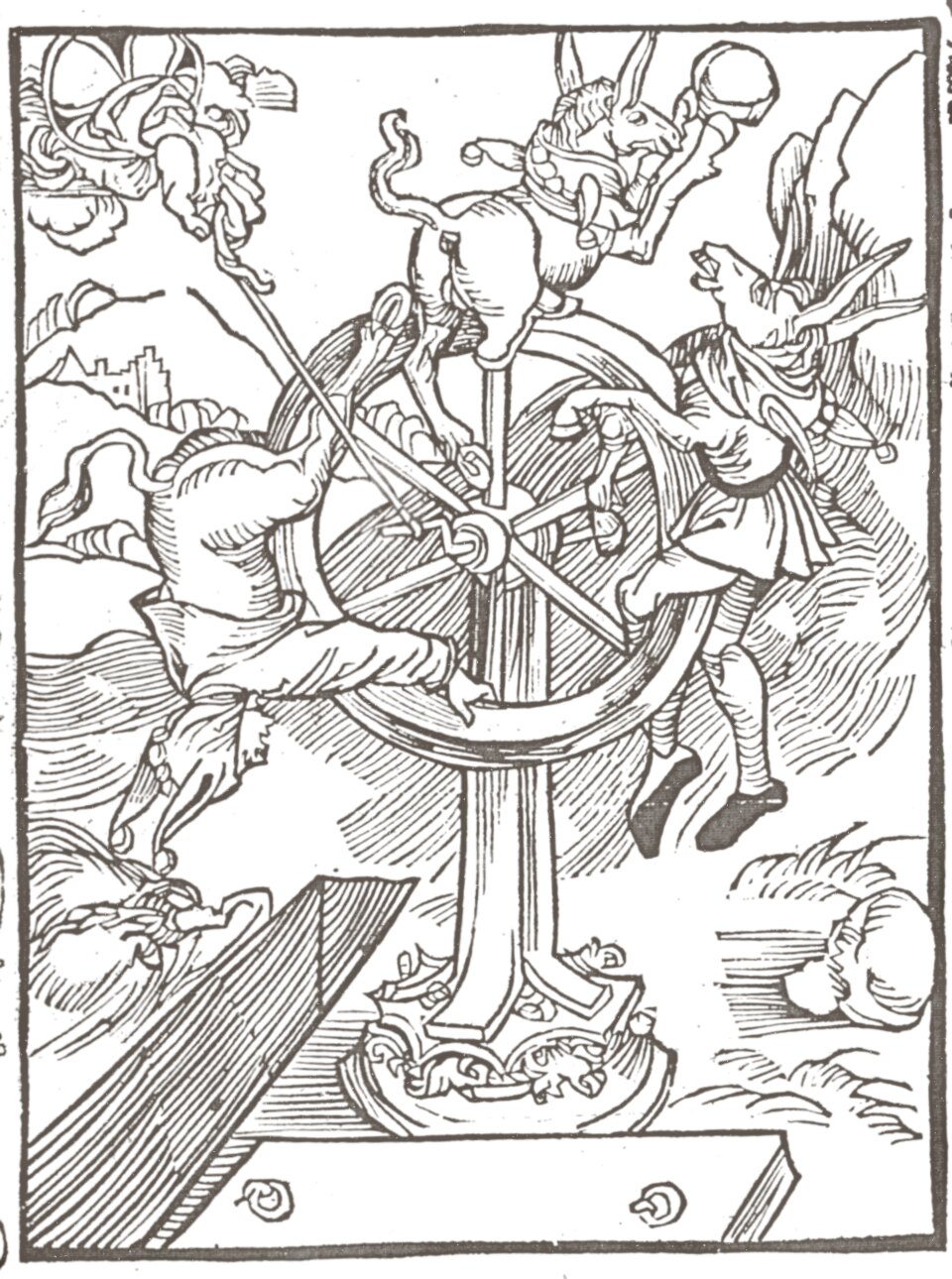
Of the mutabylyte of fortune
О превратностях счастьяOf the Fall of Fortune
Von glückes fall❦
XXXVIIО превратностях счастьяOf the Fall of Fortune
Дурак, кто лезет высоко,
Чтоб виден срам был далеко;
Всё выше метит на беду,
А счастья колесо — в ходу.
Любая вещь, взойдя в зенит,
Сама же наземь и летит.
Так высоко не встать вовек,
Чтоб в завтра верил человек
Иль ждал удач на новый день:
Вертеть-то Клото круг не лень;
Добро и власть не сохранят
От смерти на единый взгляд.
Кто властен — в страхе и в нужде:
За власть убитых тьма везде.
Недолго власть та проживёт,
Что только сила стережёт.
Где нет любви, где люд не рад, —
Забот там тьма, а нет услад.
Кто хочет, чтоб страшилась тьма,
Тому страшна и тьма сама.
Но страх — слуга совсем худой:
Недолго он хранитель твой.
Кто властен, тот учись любить
Творца и честь Его хранить.
В чьей длани правда, у того
И власть прочна — верней всего.
Тот власть употребил добром,
О чьей кончине скорбь кругом.
Увы владыке, чей конец
Встречают: «Слава те, Творец!»
Кто в гору камень катит, тот
Сам под него и попадёт.
Кто счастью вверился вполне,
Тот вмиг очутится на дне.
Der ist eyn narr der stiget hoch
Do mit man saeh syn schand vnd schmach
Vnd suocht staets eyn hoehern grad
Vnd gdenckt nit an glückes rad
Eyn yedes ding wann es vffkunt
Zuom hoechsten / felt es selbst zuo grunt
Keyn mensch so hoch hie kumen mag
Der jm verhieß den mornden tag
Oder das er morn glück soll han
Dann Clotho loßt das rad nit stan /
Oder den syn guot vnd gewalt
Vorm tod eyn ougenblick behalt /
Wer gewalt hatt der hat angst vnd nott
Vil sint durch gewalt geschlagen dott
Den gewalt man nit langzyt behalt
Den man muoß schyrmen mit gewalt
Wo nit lieb ist vnd gunst der gemeyn
Do ist vil sorg vnd wollust kleyn
Der muoß vil voerchten / der do wil
Das jn ouch soellen voerchten vil
Nuon ist vorcht / gar eyn boeser knecht
Die leng mag sie nit huetten recht
Wer hatt gewalt der selb der ler
Lieb haben gott / vnd suoch syn ere
Wer gerechtikeyt halt jn der hant
Des gwalt mag haben guot bestant
Der hatt syn gwalt wol angeleyt
Vmb des abgang man truren treit
We dem regyerer noch des dot
Man sprechen muoß gelobt sy gott
Wer waltz eyn stein vff jn die hoeh
Vff den falt er vnd duot jm we
Vnd wer verloßt sich vff syn glück
Der vellt offt jn eym ougenblick
We dayly proue by example and euydence
That many be made folys mad and ignorant
By the brode worlde, puttynge trust and confydence
In fortunes whele vnsure and inconstant
Some assay the whele thynkynge it pleasant
But whyle they to clym vp haue pleasour and desyre
Theyr fete them faylyth so fall they in the myre
Promote a yeman, make hym a gentyl man
And make a Baylyf of a Butchers son
Make of a Squyer knyght, yet wyll they if they can
Coueyt in theyr myndes hyer promosyon
And many in the worlde haue this condicion
In hope of honour by treason to conspyre
But ofte they slyde, and so fall in the myre
Suche lokys so hye that they forget theyr fete
On fortunes whele whiche turneth as a ball
They seke degrees for theyr small myght vnmete
Theyr folysshe hertis and blynde se nat theyr fall
Some folys purpose to haue a rowme Royall
Or clym by fortunes whele to an empyre
The whele than turneth lyuynge them in the myre
O blynde man say what is thyne intent
To worldly honoures so greatly to entende
Or here to make the hye ryche and excellent
Syns that so shortly thy lyfe must haue an ende
None is so worthy, nor can so hye ascende
Nor nought is so sure if thou the trouth enquyre
But that it may doute to fall downe to the myre
There is no lorde Duke kynge nor other estate
But dye they must, and from this wolde go
All worldly thynges whiche god hath here create
Shall nat ay byde, but haue an ende also
What mortall man hath ben promotyd so:
In worldly welthe or vncertayne dignyte
That euer of lyfe had houre of certaynte
In stormy wyndes lowest trees ar most sure
And howsys surest whiche ar nat byldyd hye
Where as hye byldynges may no tempest endure
Without they be foundyd sure and stedfastly
So gretest men haue moste fere and ieopardy
Better is pouertye though it be harde to bere
Than is a hye degre in ieopardy and fere,
The hyllys ar hye, the valeys ar but lowe
In valeys is come the hyllys ar barayne
On hyest places most gras doth nat ay growe
A mery thynge is mesure and easy to sustayne
The hyest in great fere, the lowest lyue in payne
Yet better ly on grounde, hauynge no name at all
Than hye on a Clyf ferynge alway to fall
Thus as me thynke it is no thynge lawdable
On fortunes whele, for one to clym to hye
Syns the swyft cours therof is so vnstable
And all must we leue whan we depart and dye
Of our short lyfe haue we no certayntye
For lachesys (whan that thou hast lefte drede)
Of thy lyue dayes shall shortly breke the threde.
Atropos is egall to pore man and estate
Defar wyll nat deth by prayer ne request
No mortall man may his furour mytygate.
Nor of hym haue one day longer here to rest:
Content the with measure (therfore) for it is best
Coueyt nat to moche in honour to excell
It is a fowle fall to fall from erth to hell
Unstable fortune exalteth some a loft
To this intent, them to brynge to an yll ende
For who that hye clymmeth his fall can nat be soft
If that mysfortune constrayne hym to dyscende
Though Julius Cesar his lordshyp dyd extende
Ouer all the worlde: yet fortune at the last.
From lyfe and lordshyp hym wretchydly dyd cast
This hath ben sene, is sene, and euer shall
That most peryll is in hyest dignyte
Howe many estatis, howe many men Royall.
Hath fortune dryuyn downe into aduersyte
Rede dyuers cronycles, and thou shall playnly se
That many thousandes hath endyd in doloure
By theyr immoderate mynde to honoure
Ouer rede Bochas and than shalt thou se playne
The fall of prynces wryten ryght compendeously
There shalt thou se what punysshement and payne
Haue to them fallen, somtyme by theyr foly
And oft is moche preuy hatered and enuy
Had agaynst lordes of the rude comonte
Where euer they go: they lyue in ieopardye
Ay dowtynge deth by cursed gyle and treason
Eche thynge mysdemynge, ferynge to be opprest
By some mysfortune, with venym or with poyson.
Thus in great honour is neyther ioy nor rest
But thought and fere, ye whyle the lyfe doth lest
Thus who that procuryth great honour to attayne
Procuryth with all, enuy, peryll, fere and payne
A lorde or state whom many men doth drede
With loueles fere, and fayned countenaunce
Unto hym selfe ought wysely to take hede
And them to fere, if he wyll voyde myschaunce
For why a comonty is of suche ignoraunce
And so enuyous, that both erly and late
They muse to destroy hym whom, they fere and hate
A man promotyd vnto hye dygnyte
Shall haue loue shewyd hym by adulacion
But no true loue nouther faythfull amyte.
Good fame nor name, ne commendacion
Ye though he be worthy great exaltacion
Pytefull louynge and full of equyte
Yet harde is to please a folysshe comonte
Therfore me thynke of all thynge it is best
Man to be pleased and content with his degre
For why in mesure, is suerty eas and rest
And ay moste peryll in hyest dignyte
Fortune is full of changes and mutabylyte
Trust nat therto, therby comyth do gode
But nowe hye nowe lowe, vnstable as a flode
Alexander barklay to the folys
Labour nat man with to moche besy cure
To clymme to hye lyst thou by fortune fall
For certaynly, that man slepyth nat sure
That lyeth lows vpon a narowe wall
Better somtyme to serue, than for to gouerne all
For whan the Net is throwen into the se
The great fysshe ar taken and the pryncipall
Where as the small escapyth quyte and fre
Alexander Barclay, The Shyp of Folys of the Worlde, London, 1509 — вольное переложение королевской строфой, с «посланиями» переводчика.a free version in rhyme royal, with the translator’s own envoys.
· XXXVII ·