Das NarrenschiffXL
Кто зрел, как тяжко дурень пал,А сам беречься впредь не стал,Тот дурня за бороду взял.
Wer sicht eyn narren fallen hartVnd er sich darnoch nit bewartDer gryfft eym narren an den bart
Here we expresse, the errour and blyndnesOf them that se others aduersyteTheyr wofull fall the ruyne and dystres.Yet sue they the same, and ware they wyll nat beThough they by example the payne of other seYet leue they nat: thus may they clayme a placeWithin my Nauy, as folys voyde of grace
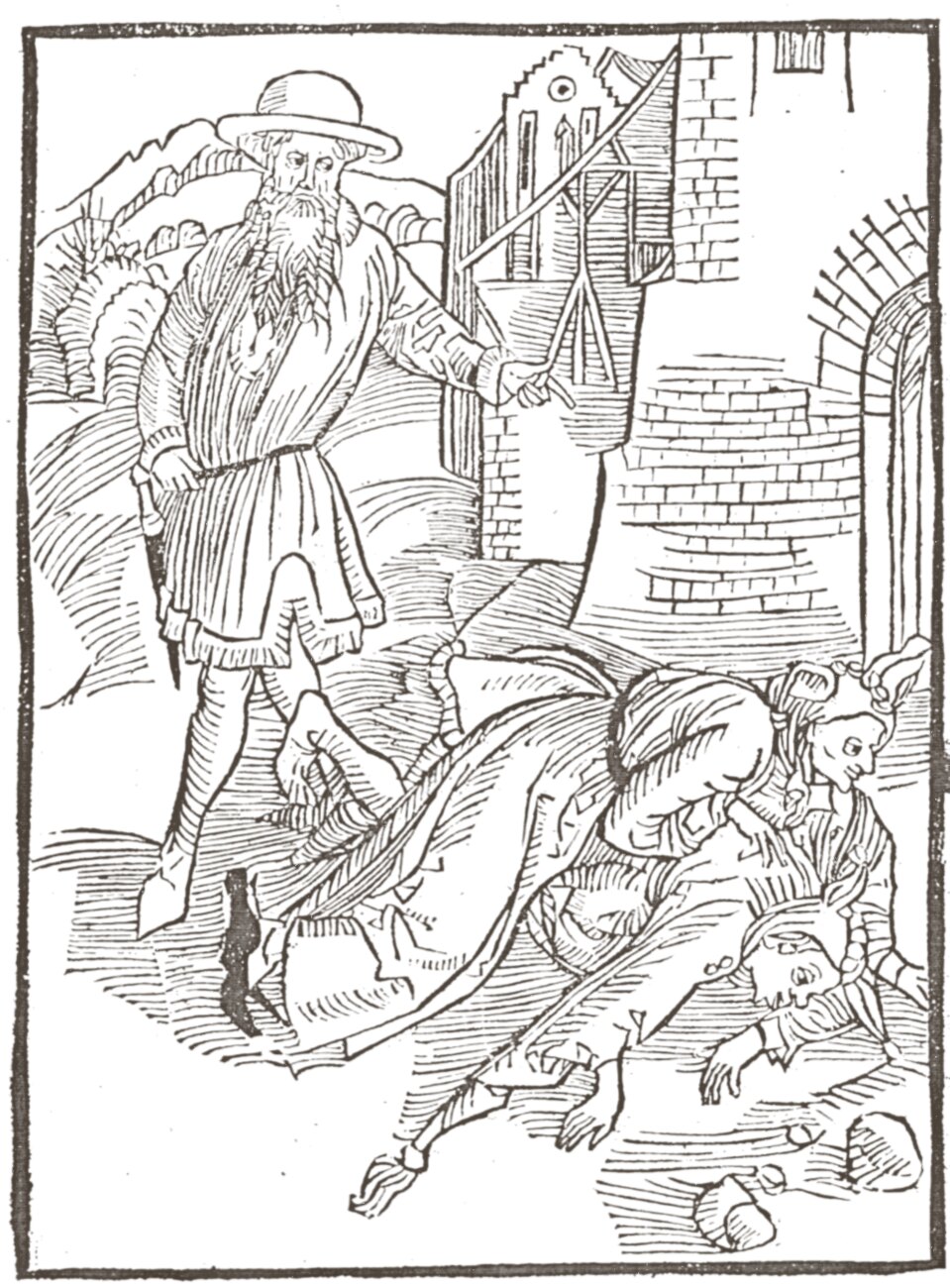
Of folys that can nat beware by the mysfortune and example of others damage
Чужая глупость — не урокOf Taking No Warning from Fools
An narren sich stossen❦
XLЧужая глупость — не урокOf Taking No Warning from Fools
Глупцов паденье — что ни день,
И всем над ними смех не лень;
Их презирают мудрецы,
А сами в колпаке — глупцы.
И дурень дурня же бранит,
А сам в его же след катит
И всякий раз споткнётся там,
Где прежде пал тот дурень сам.
Зрел Гиппомен: не одного
Главы лишили до него, —
А всё ж и жизнью, и собой
Рискнул — и чуть не взят бедой.
Бранит слепой слепца: «Слепец!» —
Хоть оба пали наконец.
Рак рака вздумал укорить,
Что задом тот привык ходить,
А оба шли не передом:
Один шёл за другим гуськом.
Кто не внимал отцу, не раз
Пойдёт под отчимов указ.
Не езди в небе Фаэтон,
Икар будь лётом усмирён,
Отцов совет прими они —
Продлились бы младые дни.
Кто Иеровоама путь
Избрал — тем милость не вернуть,
Хоть зрели все: и казнь, и бич
Спешат без отдыха настичь.
Кто зрел, как тяжко дурень пал,
Смотри, чтоб сам не оплошал:
Тот вовсе не дурак, заметь,
Кто мог на дурнях поумнеть.
Лиса в пещеру не пошла:
Назад следов там не нашла.
Man sicht taeglich der narren fal
Vnd spottet man jr vberal
Vnd synt verachtet by den wysen
Die doch jnn narren kapp sich brysen
Vnd schilt eyn narr den andern narren
Der doch vff synen weg duot karrhen
Vnd stoßt sich do zuo aller frist
Do vor der narr gefallen ist
Hyppomenes sach manchen gouch
Vor jm enthoubten / doch wolt er ouch
Sich wogen / vnd syn leben gantz
Des wer nah gsyn vnglück syn schantz
Eyn blind den andern schilttet blyndt
Wie wol sie beyd gefallen synt
Eyn krebs den andern schaltt / vmb das
Er hynder sich gegangen was
Vnd ging jr keyner für sich doch
Dann eyner ging dem andern noch
Eym stieffvatter volgt dick vnd vil
Wer nit sym vatter volgen wil
Hett Phaeton syn faren gelon
Vnd Icarus gemaecher geton
Vnd beid gefolgt jrs vatters rott
Sie weren nit jn der jugent dot
Welcher den weg Hyeroboam
Gyng / keyner ye zuo gnaden kam
Vnd sahen doch / das plag vnd roch
Gyng staets on vnderloß dar noch
Wer sicht eyn narren fallen hart
Der luog / das er syn selbs wol wart
Dann das ist nit eyn doreht man
Wer sich an narren stossen kan
Der fuchs wolt nit jnn berg / vmb das
Nye keyner wyder kumen was /
We dayly se the mysfortune and damage
And often fallys, to pouerte and payne
Whiche folys suffer for theyr synne and outrage
Some drowned, some maymed, some other wyse slayne
Yet this example can nat cause vs refrayne
Our wretchyd lyfe, and seke for remedy
We marke no thynge anothers ieopardy.
We se the mockynge scorne and derysyon
That folys hath ofte tyme whan they offende
We se theyr losse, theyr shame and theyr confusion
Howe be it all this can cause vs to amende
We can no thynge and to nought we intende
So many folys I fynde that playne I thynke
Theyr weyghty charge shall cause my shyp to synke
Suche ar despysyd of men discrete and wyse
Ye and more ouer these folys ar so blynde
That echone of them the other doth despyse
With sharp rebukes, wordes lewde and vnkynde
Yet in theyr lyfe no difference may we fynde
And though they haue sene a thousande brough to shame
For one sore vyce: yet lyue they in the same
The example of other can nat theyr myndes moue
Theyr wyttis ar blynde theyr foly is the cause
Alas mad folys why do ye vyce thus loue
Rennynge ay to deth without all rest or pause
Alas, at the last retourne to christis lawes
Be ware, whan ye other se taken in the snare
Let anothers peryll cause you to be ware
Ye do nat so, alas it is great shame
Your synne hath quenchyd your grace and gostly lyght
One blynde man another doth chyde and blame
And yet both stomble, nat goynge euyn or right
A blynde man hym ledyth that also hath no syght
So both in the dyche fallyth in suche a wyse
That one can nat helpe, the other agayne to ryse
One crab blamys another for hir bacwarde pace
And yet the blamer sothly can none other do
But both two ar in theyr goynge in lyke case
The one goeth bocwarde, the other doth also
Many of these folys after that maner go
But who that of his moders doctryne hath disdayne:
Shall by his stepdame endure wo care and payne
And perchaunce after abyde the correccyon
Of the sayde stepdame, in place of punysshement.
For his synne, sufferynge hir vniust subieccien
And who that nat foloweth the commaundement
Of his fader beynge to hym obedyent
May fortune after in hunger thyrst ond colde
Obey that stranger, whom he nat gladly wolde
We fynde Hystories wryten longe and ample
In dyuers bokes of great auctoryte
The hole Bybyll sheweth to vs example
Howe they were punysshed that lyuyd in cruelte
I fynde also wryten in bokes of Poetrye
Howe that Pheton was brent with the lyghtnynge
For his presumpcion, agaynst a myghty kynge
We haue example also by Icarus
Whiche contrary vnto the commaundement
Of his crafty father named Dedalus
By fleynge to hye his wynges and fethers brent
And so descendyd and in the se was drent
Thus these two endynge by theyr lewdnes in care
By theyr example sholde cause vs to beware
We dayly se before our syght and our presence
What mysauenture to many one doth fall
And that worthely for theyr synne and offence
Yet ar we blynde, and ar nat ware at all
But in our synnes lyue vnto them egall
And where by synne we se one come to shame
We wyllyngly (alas) ensue the same
Therfore who sethe a mad fole come to wo
Or fall in peryll for lacke of a good gyde
By another way ought craftely to go
And (by anothers yll) for his helthe to prouyde
The fox was ware, and peryll set asyde
And wolde nat enter into the caue, for playne
Of bestis that entred sawe he none come agayne
The enuoy of barklay
Lerne man, lerne of bestes to be ware
Of others peryll, by theyr enormyte
For if one byrde be onys tane in a snare
The other auoyde as fast as they may flee
A fysshe byrde or beste that hath in peryll be
Of net hoke or snare, if that they may escape.
Wyll after euer beware, but blynde man wyll nat se
His owne destruccion, but after it doth gape
Alexander Barclay, The Shyp of Folys of the Worlde, London, 1509 — вольное переложение королевской строфой, с «посланиями» переводчика.a free version in rhyme royal, with the translator’s own envoys.
· XL ·